
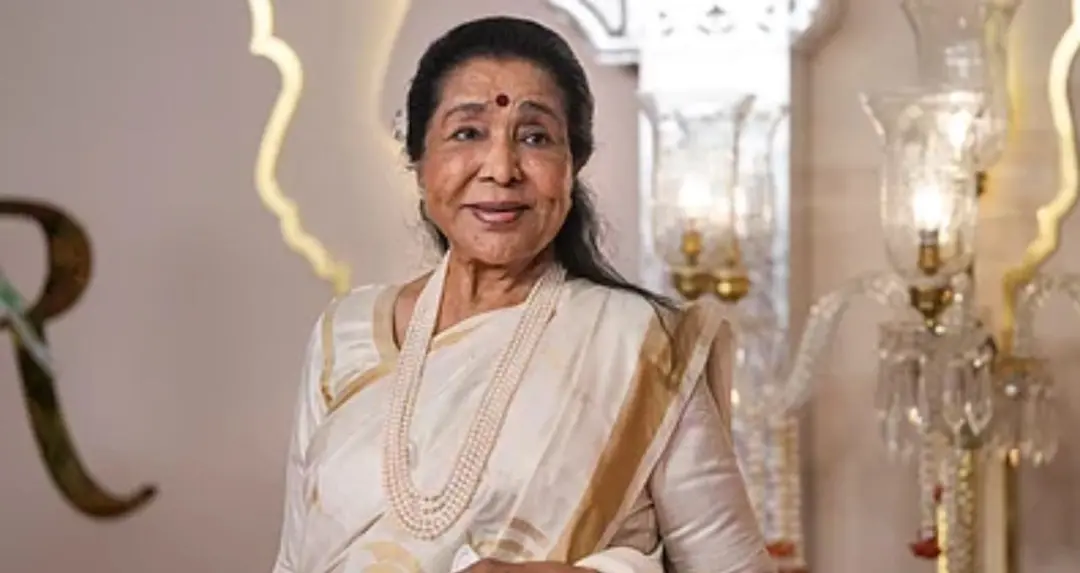
Asha Bhosle, one of the most prominent voices in Indian cinema and music, died at the age of 92. According to family members and hospital sources, she passed away on Sunday afternoon at Breach Candy Hospital in Mumbai. She had been admitted on Saturday evening after her health deteriorated. Initial reports indicated cardiac arrest and complications related to her lungs.
The family stated that final respects will be held at her residence at 11 am on Monday, followed by cremation at Shivaji Park in Mumbai at 4 pm.
Her passing has triggered widespread mourning across the country, with fans, artists, musicians, and public figures paying tribute.
Voice Spanning Eight Decades
Asha Bhosle’s musical career extended across more than eight decades. She recorded over 12,000 songs and lent her voice to more than 20 languages, including Hindi. From the 1940s to the modern era, her work reached multiple generations.
Her repertoire covered a wide range of genres, including romantic songs, ghazals, qawwalis, pop, cabaret, bhajans, and folk music.



Among her notable songs are “Dum Maro Dum”, “Piya Tu Ab To Aaja”, “Chura Liya Hai Tumne”, “Yeh Mera Dil”, and “Jaane Jaa Dhoondta Phir Raha”.
Early Life and Professional Struggles
Asha Bhosle was the daughter of Deenanath Mangeshkar and the younger sister of Lata Mangeshkar. Her father died when she was nine years old, placing financial responsibility on the family.
At a young age, Asha Bhosle and Lata Mangeshkar began singing to support the household. Despite difficult circumstances, she established an independent identity in the industry.
Personal Life
Her personal life included significant challenges. Her first marriage at a young age, against family wishes, did not succeed and involved domestic difficulties. She later returned to her parental home with her children and rebuilt her life and career.
She later married music composer R. D. Burman. Their collaboration is regarded as one of the most notable partnerships in Indian film music. Their professional association began with the film Teesri Manzil and continued to shape modern Indian music through experimentation and innovation.
Early Career Rejection
In an earlier interview, Asha Bhosle stated that during the early phase of her career, she and Kishore Kumar were turned away from a recording studio on the grounds that their voices were not suitable for recording.
Later, her voice became widely recognised in the industry.
Awards and Recognition
Asha Bhosle received several honours for her contribution to music, including the Dadasaheb Phalke Award, the Padma Vibhushan, multiple National Film Awards, and international recognitions.
Her work remains associated with Indian cultural identity across generations.
Nationwide Response
Following the announcement of her death, messages of condolence were shared widely. Members of the music industry described her as a defining figure in Indian music.
Her death marks the end of a significant chapter in Indian musical history.
Legacy
Her recordings continue to be broadcast across radio, films, and public performances, and remain part of cultural memory for multiple generations.


