Chhath Puja, one of the major festivals observed in Bihar, Jharkhand and eastern Uttar Pradesh, will begin on Friday, November 13, 2026, and conclude on Monday, November 16. The four-day festival is dedicated to the worship of the Sun God and Chhathi Maiya. Devotees observe rituals and fasts seeking family prosperity, peace and good health for their children.
Preparations for Chhath Puja generally begin after Diwali. Families arrange traditional items such as bamboo baskets, soops and ingredients required to prepare the festival's offerings. Both women and men observe the fast as part of the religious tradition.
According to the Hindu calendar, Chhath Puja begins on the Chaturthi Tithi of the Shukla Paksha in the month of Kartik. The festival is observed over four days, beginning with Nahay Khay, followed by Kharna, Sandhya Arghya and Usha Arghya.
The festival will follow this schedule in 2026. Nahay Khay will be observed on Friday, November 13, followed by Kharna on Saturday, November 14. Devotees will offer Sandhya Arghya to the setting Sun on Sunday, November 15. The festival will conclude with Usha Arghya to the rising Sun on Monday, November 16.
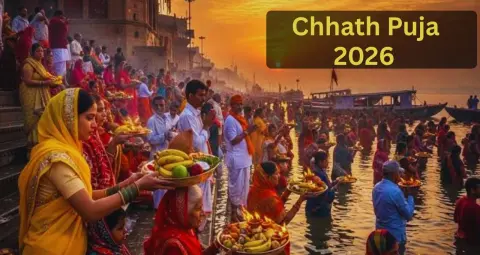
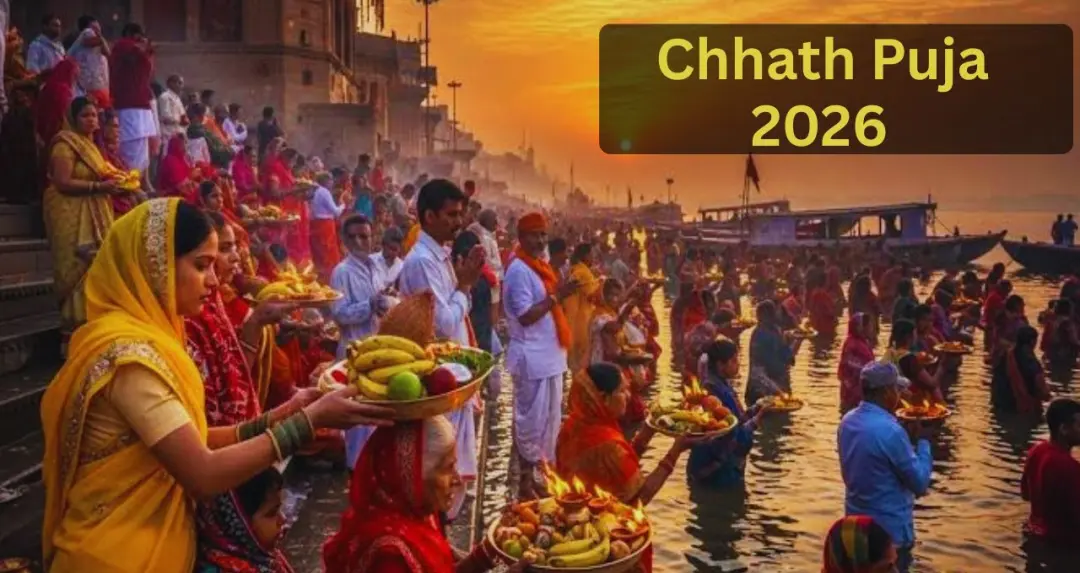
A distinctive feature of Chhath Puja is the worship of both the setting and rising Sun. Devotees stand in water at rivers, ponds and designated Chhath ghats to offer Arghya in the evening. They return to the ghats the following morning to offer water to the rising Sun. After completing the rituals, family members receive the Prasad.
Nahay Khay marks the first day of Chhath Puja. Devotees begin the day with a ritual bath in the morning. In several places, people visit the Ganga and other rivers to take a holy dip.




After bathing, a separate meal is prepared at home for the occasion. The traditional menu generally includes pumpkin curry, chana dal and rice. Onion and garlic are not used in the preparation. The person observing the fast eats first, followed by other family members. Food preparation and worship practices may vary slightly between families.
Preparations for Chhath offerings also begin on this day. Wheat is cleaned, utensils required for the rituals are washed and kept separately, and special attention is given to cleaning the area where the Prasad will be prepared.
According to the Hindu calendar, Kartik Shukla Chaturthi Tithi will begin at approximately 6:09 PM on November 12 and continue until around 8:42 PM on November 13. Nahay Khay will be observed on November 13 in accordance with the Udaya Tithi.
The second day of Chhath Puja is known as Kharna, also called Lohanda in several regions. In 2026, the ritual will be observed on Saturday, November 14.
Devotees observing the fast abstain from food throughout the day. Worship takes place after sunset, following which the devotees complete the Kharna ritual by consuming the Prasad.
Jaggery and rice kheer are traditionally prepared for Kharna, along with roti. In many families, an earthen stove is used to prepare the kheer. After the prayers, the person observing the fast consumes the Prasad first. It is subsequently distributed among family members and neighbours.
After consuming the Kharna Prasad, devotees begin an approximately 36-hour waterless fast. During this period, they abstain from drinking water. The fast continues even after offering Arghya to the setting Sun on the following evening. It is completed only after offering Arghya to the rising Sun on the morning of November 16.
According to the Hindu calendar, Panchami Tithi will begin at approximately 8:42 PM on November 13 and continue until around 11:23 PM on November 14.
The third day is an important part of the Chhath Mahaparv. On this day, devotees visit riverbanks, ponds and designated Chhath ghats in the evening to offer Arghya to the setting Sun. In 2026, Sandhya Arghya will be observed on Sunday, November 15.

Kartik Shukla Shashthi Tithi will begin at approximately 11:23 PM on November 14 and continue until around 2:00 AM on November 16.
The timing of Sandhya Arghya varies from city to city according to the local sunset time. In Patna, sunset on November 15 is expected at approximately 5:01 PM, while in Delhi, the Sun is expected to set at around 5:28 PM.
On this day, bamboo baskets and soops are arranged with traditional offerings, including Thekua, fruits, coconuts and other items required for the rituals. Family members accompany the devotees to the ghats. At sunset, devotees stand in water and offer Arghya to the Sun God.
The final day of Chhath Puja will be observed on Monday, November 16. Devotees offer Arghya to the rising Sun in the morning, completing the four-day festival.
Devotees reach the ghats before sunrise and perform prayers dedicated to the Sun God. In Patna, sunrise on November 16 is expected between approximately 6:07 AM and 6:08 AM. In Delhi, sunrise is expected at around 6:44 AM. The timing of the morning Arghya in other cities will depend on their respective sunrise times.
According to the Hindu calendar, Saptami Tithi will begin at approximately 2:00 AM on November 16 and continue until around 4:19 AM on November 17.
After offering Arghya to the rising Sun, devotees complete the worship and consume the Prasad before performing the ritual conclusion of their fast, known as Paran. This marks the end of the four-day Chhath Mahaparv.
Chhath Puja holds a special place in the lives of people in Bihar, Jharkhand and eastern Uttar Pradesh. According to religious beliefs, worshipping the Sun God and Chhathi Maiya during the festival brings peace and prosperity to the family. Devotees also seek blessings for the good health and long life of their children.
Cleanliness and adherence to religious rituals are considered particularly important during Chhath Puja. In many families, the tradition has been followed for generations, passed down from grandmothers and older family members.
The preparations involve the participation of the entire family. While some members help prepare the Prasad, others arrange and transport the items required for worship at the ghats. The festival is observed with devotion and adherence to traditional practices.