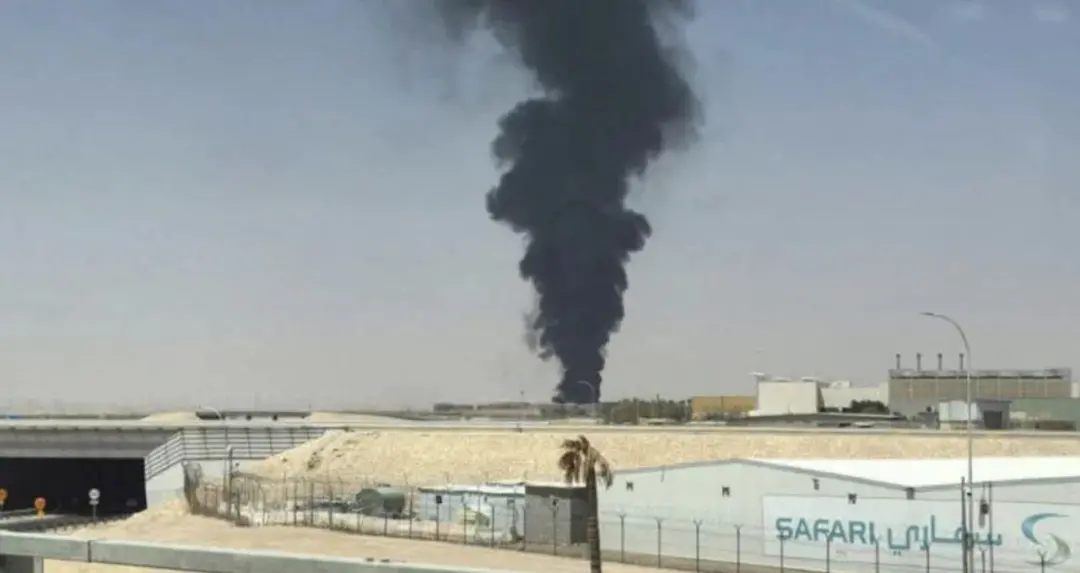
Saudi Arabia’s Abha International Airport and King Khalid International Airport in Riyadh were targeted in Houthi drone and missile attacks on October 6 and 7, according to Saudi authorities. Three people were killed and 36 others were injured in the attacks, with casualties reported at both airports.
Saudi Arabia’s General Authority of Civil Aviation (GACA) provided details of the attacks and casualties on Wednesday. The Houthi organisation also claimed responsibility for both attacks. The Saudi-led coalition subsequently claimed that it carried out retaliatory strikes against Houthi military positions in Yemen.
The coalition said more than 80 Houthi military sites were targeted in Yemen. The developments come amid the continuing conflict in Yemen and tensions in the Red Sea region.
According to Saudi authorities, two women were killed in the attack on Abha International Airport. Both were foreign nationals, identified as citizens of Morocco and Algeria. A total of 28 people were reported injured in the attack.
The injured included Saudi citizens as well as nationals of Bangladesh and the Philippines. All those injured were taken to hospitals for medical treatment following the attack.
Saudi civil aviation authorities said the airport’s security arrangements were being reviewed and that necessary measures were being taken to ensure the safety of passengers and employees.
Abha International Airport is located in southwestern Saudi Arabia and, because of its relative proximity to the Yemeni border, has been targeted in Houthi attacks in the past.
The Houthis also claimed to have targeted King Khalid International Airport in Riyadh. According to officials, one Sudanese national was killed in the attack.




Eight people were reported injured, including five Saudi citizens, two Egyptian residents and one Pakistani citizen.
The targeting of the major international airport in the Saudi capital prompted authorities to take precautionary measures concerning passenger safety and aircraft operations.
Houthi military spokesperson Yahya Saree claimed that drone and missile attacks were carried out at several locations in Saudi Arabia. According to him, the organisation conducted three major military operations using ballistic and cruise missiles along with drones.
According to the Houthi spokesperson’s account, the first operation targeted King Khalid International Airport in Riyadh. The organisation claimed that the attack reached its target and disrupted air traffic.
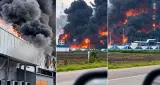
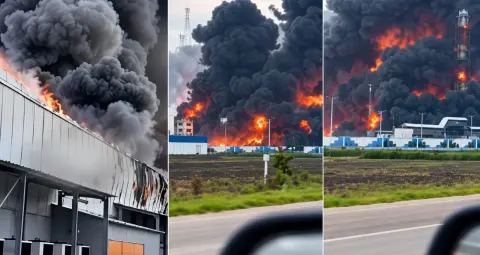
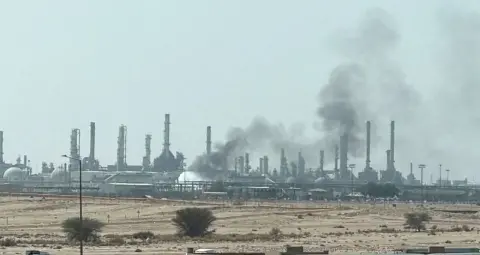
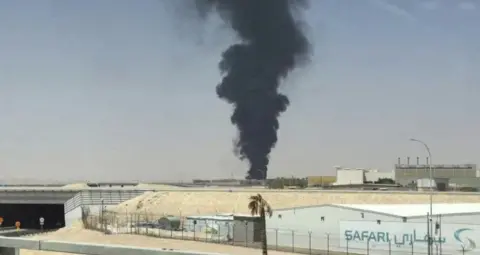
In the second operation, the Houthis claimed to have targeted a Saudi Aramco oil facility in Rabigh. The Houthi spokesperson said a fire broke out there following the attack.
The third operation was claimed to have targeted Abha Airport, Khamis Mushait Air Base and a military position in the Asir region. The organisation also said that important sites in Najran and Jizan were targeted.
Independent confirmation of all these claims was not immediately available.
The Houthis also claimed to have targeted Saudi Arabia’s energy infrastructure. The organisation’s military spokesperson said a missile and drone attack was carried out against an Aramco oil facility in Rabigh.
Aramco is one of Saudi Arabia’s key energy companies and has a central role in the country’s oil economy. The source material states that any attack on a major facility linked to oil production, processing or exports could have implications for regional markets.
However, there was no detailed independent confirmation of the Houthi claim or the extent of any damage.
Following the attacks on the airports, the Saudi-led coalition in Yemen claimed to have launched large-scale retaliatory strikes against Houthi positions.
The coalition said more than 80 military sites in Yemen were targeted. It also claimed to have destroyed a ballistic missile launch platform that was being used to carry out a missile attack against Saudi Arabia.
Coalition spokesperson Colonel Turki al-Malki said the operation was conducted in Yemen’s capital, Sanaa. He claimed that preparations for another attack against Saudi Arabia were under way from the location.
The developments mark a renewed series of missile and drone attacks between Saudi Arabia and the Houthis.
The conflict between Houthi rebels and government-backed forces in Yemen has continued for a prolonged period. Saudi Arabia has supported Yemen’s internationally recognised government, while the Houthi organisation maintains control over large parts of the country.
In recent developments, Yemen’s government-backed forces have intensified a new military campaign against the Houthis. The main objective is to strengthen control over strategic areas along the Red Sea coast and around the Bab al-Mandeb Strait.
Bab al-Mandeb is one of the world’s important maritime routes. It connects the Red Sea with the Gulf of Aden and is important for maritime trade between Asia, Europe and the Middle East.
According to reports, Houthi forces strengthened their position along Yemen’s Red Sea coast in September, increasing their control over several important areas around Mocha and Bab al-Mandeb.
This strengthened the Houthis’ military presence around the strategic maritime route. In response, Saudi-backed Yemeni forces intensified their military campaign at the beginning of October.
In an operation launched on October 5, the Yemeni army claimed to have regained control of several strategic locations, including the Dhubab area near Bab al-Mandeb.
Government forces subsequently also claimed to have advanced towards Mocha and liberated the city from Houthi control. According to available reports, government forces pushed the Houthis back from several areas that had been taken over by the group during the previous month.
The attacks on Saudi airports and the subsequent retaliatory airstrikes in Yemen extend beyond the two sides involved. The Red Sea and Bab al-Mandeb region is already a sensitive area for global trade and maritime security.
The source material states that any military escalation in the area could increase pressure on international shipping, energy supplies and regional security. Attacks on sites of civilian importance, including airports and energy infrastructure, also raise issues concerning civilian safety.
Several military claims by Saudi Arabia and the Houthis remain independently unverified. However, the deaths and injuries reported in the airport attacks have highlighted the human impact of the conflict.
The extent to which the retaliatory military campaign proceeds and whether the continuing attacks between the two sides expand the regional conflict remain to be seen.