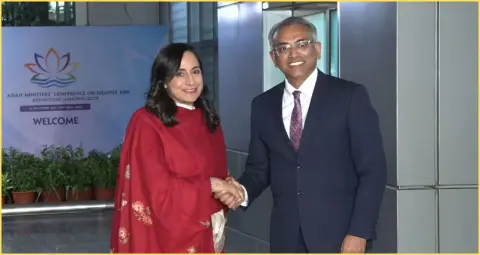
The Indian Institute of Technology (IIT) Kanpur has launched its largest-ever fundraising campaign, titled “Greater Than Us,” to support scientific research, technological innovation and institutional development. The campaign aims to raise $1 billion, equivalent to approximately ₹9,000 crore, by March 2029. Defence Minister Rajnath Singh inaugurated the initiative at Bharat Mandapam in New Delhi on October 14. According to the institute, alumni, donors, corporate partners and the government had already committed ₹4,155 crore at the formal launch.
The funds will be used to strengthen research facilities, support talented students, attract expert faculty and promote companies based on emerging technologies.
IIT Kanpur has structured the campaign around three pillars: Foundation, Talent and Frontier. Foundation focuses on strengthening research capabilities and institutional infrastructure. Talent aims to support students, researchers, faculty members and individuals involved in innovation. Frontier seeks to advance research into emerging technologies and translate laboratory-developed knowledge into practical applications.
The institute intends to integrate these three areas to strengthen research, education, technological development and entrepreneurship. Its priority areas include deep technology, artificial intelligence, quantum technology, semiconductors, cybersecurity, drones and medical technology. Research in these fields requires advanced equipment, specialised training, substantial computing capacity and long-term financial support.
At the campaign's inauguration, Rajnath Singh emphasised the need to develop indigenous technologies and strengthen collaboration among educational institutions, defence establishments, scientific organisations and private industry. He highlighted the growing use of artificial intelligence, autonomous systems, unmanned platforms, advanced sensors, cybersecurity and space-based technologies, noting the importance of strengthening India's technological capabilities. He also underscored the role of indigenous research in defence and national security.
A central research facility, with a planned allocation of ₹524 crore, is among the campaign's major infrastructure projects. The facility is intended to provide researchers across departments with access to advanced scientific equipment and specialised research resources.
The proposed infrastructure will include equipment for semiconductor and device processing, clean-room facilities, and advanced spectroscopy and microscopy systems. These facilities are expected to support research involving the fabrication and analysis of chips and electronic devices, the study of materials and the testing of device performance.
The planned infrastructure will provide researchers with opportunities to experiment with new materials and devices, supporting research in indigenous electronics and advanced manufacturing.
IIT Kanpur also plans to develop a high-performance computing facility at an estimated cost of approximately ₹200 crore. The facility will use advanced graphics processing unit (GPU)-based computing infrastructure to support artificial intelligence and scientific computation.




Such computing capacity is used to train AI models, analyse large datasets, simulate weather and physical systems, and solve complex scientific problems. Researchers across departments are expected to gain access to computing resources for work involving machine learning, computer vision, language-based AI, scientific modelling and engineering simulations.
The effectiveness of the facility will also depend on access to trained specialists, appropriate software, electricity and maintenance. Its practical benefits will depend on how efficiently researchers can access and use the infrastructure.
Quantum technology is another priority under the campaign. IIT Kanpur plans to strengthen research in quantum computing, quantum communication and quantum sensors, which use scientific principles different from those underlying conventional computing.
These technologies may have applications in specialised computing tasks, secure communication and highly sensitive measurement. Advancing research in the field requires specialised equipment, controlled laboratory environments and expertise across multiple disciplines. The institute intends to strengthen research capabilities and create opportunities for emerging talent in quantum technology.
The campaign also aims to increase investment in scholarships, doctoral fellowships and academic opportunities. Financial assistance is intended to help eligible students meet the costs associated with education, accommodation and research, enabling them to continue their studies and focus on academic work.
Doctoral fellowships can provide researchers with the opportunity to work on scientific problems over extended periods, particularly in fields where discoveries and technological solutions may require several years of research.
IIT Kanpur also plans to support faculty chairs, provide assistance to young faculty members and invite experts with international-level expertise. These initiatives are intended to strengthen the institute's academic environment, expose students to emerging technologies and research methodologies, and expand collaboration between industry and universities.
Entrepreneurship is another key component of the campaign, with IIT Kanpur seeking to help students and researchers translate scientific discoveries into commercial products and businesses. This process involves developing prototypes, testing safety and quality, assessing practical applications and addressing production, investment, marketing and business operations.
IIT Kanpur alumnus Rahul Gautam has committed ₹180 crore towards establishing the Gautam School of Innovation and Entrepreneurship (G-SINE) at the institute's Noida campus. A memorandum of understanding was signed in connection with the commitment during the campaign's inauguration.
The proposed school will focus on developing entrepreneurs and technology leaders capable of building businesses based on emerging technologies. Its areas of focus will include artificial intelligence, cybersecurity, digital health, biotechnology, drones and advanced manufacturing.
G-SINE is planned to have full-time faculty members and degree programmes. Its flagship programme is proposed to begin in July 2027 as an MBA in Technology and Entrepreneurship.
The programme is intended to combine technical knowledge with business management capabilities, including investment fundraising, understanding market requirements, developing commercial business models and operating companies.
In collaboration with the proposed deep-tech hub at the Noida campus, G-SINE also plans to provide resources for developing technology-based products. These resources are intended to help researchers advance laboratory-developed ideas and test them under real-world conditions.
The development of deep-tech products can require considerable time and investment, making research infrastructure and entrepreneurship training important components of the proposed support system.
IIT Kanpur's Startup Incubation and Innovation Centre (SIIC) is expected to play a role in the institute's entrepreneurship initiatives. According to the institute, SIIC has provided incubation support to 571 startups to date.
Incubation programmes offer early-stage businesses guidance, technical assistance, access to experts and opportunities for development. Such support can be particularly relevant to research-based startups that need additional time and resources to develop products and demonstrate their practical applications.
The Frontier segment aims to connect fundamental research in emerging technologies with practical applications. Its priority areas include artificial intelligence, quantum technology, cybersecurity, semiconductors, drones, medical technology and environmental sustainability.
The initial fundraising target for this segment was ₹1,000 crore. According to information provided by the institute, commitments of ₹1,556 crore have already been received. The funds are intended to support research and development initiatives across these technology areas.
In cybersecurity, research priorities include identifying vulnerabilities, developing security systems and strengthening digital infrastructure. The increasing use of digital technologies in government services, banking, industry, healthcare and communications has expanded the need to protect data, networks and digital systems.
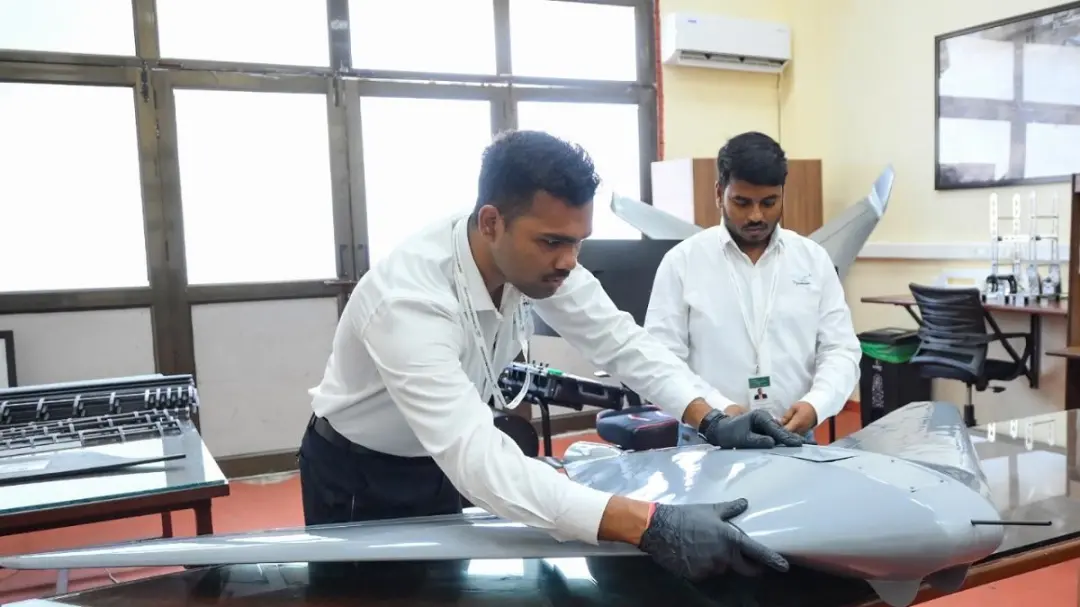
Drone and autonomous-system research is another area covered by the campaign. Potential applications include surveillance, agriculture, disaster management, industrial inspection, deliveries and defence-related activities. Research in these fields involves sensors, control systems, communications, navigation, energy management and safety technologies.
The development of indigenous technologies for defence is another focus of the campaign. Modern defence systems increasingly use unmanned platforms, advanced sensors, data analytics, cybersecurity and artificial intelligence.
Research conducted domestically, combined with collaboration among IIT Kanpur, defence establishments and industry, can support the development of technological systems tailored to national requirements. Before being deployed for defence applications, these technologies require testing and verification of their safety and reliability.
Medical technology is also among the institute's priority areas. Research in medical devices, diagnostic systems and digital health solutions requires collaboration among engineering, medical science and computing disciplines. Potential research areas include device prototyping, data analysis, diagnostic support and technologies intended to improve access to healthcare services.
The practical application of these technologies will depend on the necessary testing and their ability to meet real-world healthcare requirements.
The campaign includes plans to improve campus infrastructure through the development of four new student hostels, each with an approximate capacity of 1,000 students. The institute also proposes to develop 96 faculty residences and a mental health and wellness centre.
The planned accommodation is intended to support students living on campus and improve residential facilities for faculty members. The proposed mental health and wellness centre is intended to provide counselling and support to students who need assistance during their studies and research.
According to IIT Kanpur Director Professor Manindra Agrawal, the campaign aims to mobilise resources for the institute's next phase of development and invest in students and researchers who could build new discoveries, technologies and companies in the future.
The ₹4,155 crore in commitments secured before the campaign's launch represents a substantial portion of the fundraising effort. However, commitments differ from funds actually received and spent. The campaign's progress will therefore depend on the amount of funding ultimately raised, the implementation status of projects and their outcomes.
IIT Kanpur aims to raise $1 billion, or approximately ₹9,000 crore, by March 2029. The planned expenditure covers research infrastructure, scholarships, support for faculty members and researchers, student accommodation and technology-based entrepreneurship.
The Greater Than Us campaign brings together research, education, advanced technology and entrepreneurship under a single fundraising initiative. Its implementation will depend on the mobilisation of the targeted resources, progress across planned projects and the extent to which technologies developed through research address the requirements of industry and society.