The free trade agreement between India and the European Union has altered existing trade arrangements in the global market. Under the agreement, several Indian products will receive zero-duty access to the European market, with direct implications for the textile and garments sector.
The agreement, concluded after prolonged negotiations, aims to reduce trade barriers, remove tariffs, and promote investment between India and the European Union. As a result, Indian exporters will be able to supply goods to Europe without import duties that previously applied.




Indian textile and garment products will be eligible for duty-free entry into the European Union following implementation of the agreement. This is expected to lower prices of Indian apparel, ready-made garments, and fabrics in the European market.
Industry experts have stated that zero-duty access, combined with production scale and manufacturing capacity, could strengthen India’s position relative to exporters from Bangladesh, Turkey, and Vietnam. According to these assessments, Indian garment exports could record annual growth of 20 to 25 percent after the agreement takes effect.
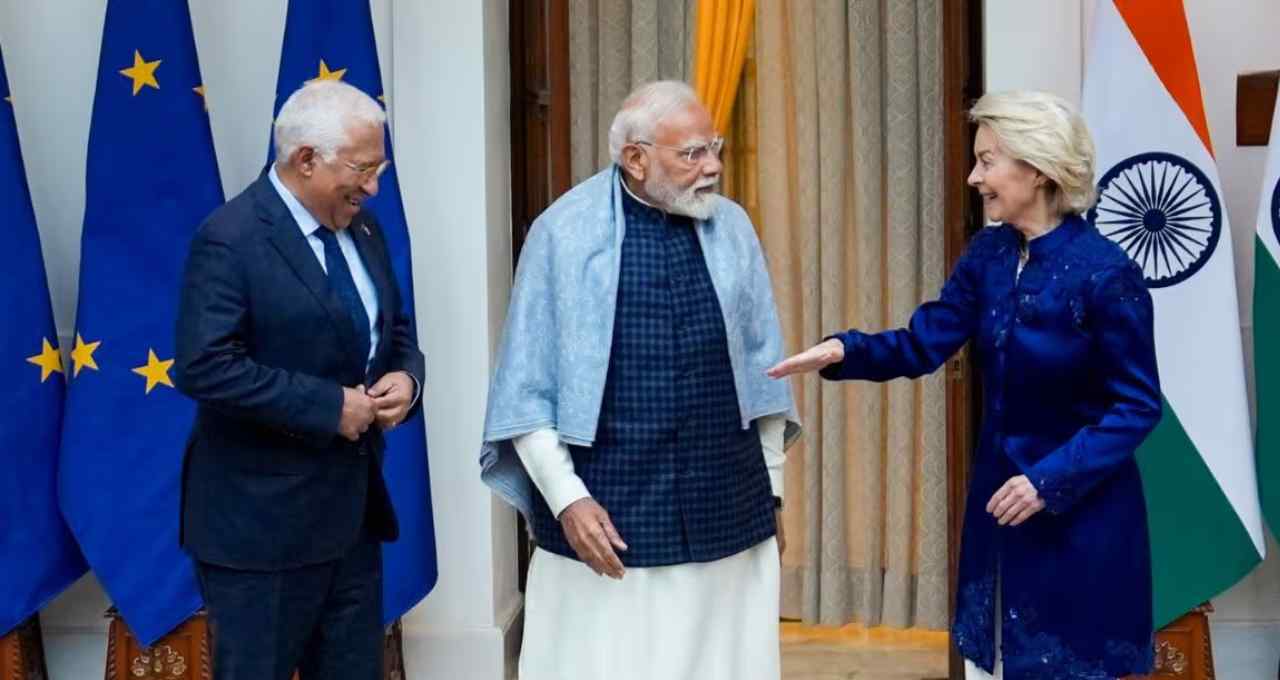
India’s share in the European Union market has remained limited so far, but is expected to expand following the removal of tariffs.
Bangladesh, whose economy is heavily dependent on the ready-made garments sector accounting for more than 80 percent of its total exports, relies on the European Union as its largest export market. With India receiving duty-free access, Bangladesh’s market share in Europe may face pressure.
Turkey has been a key supplier to Europe, supported by geographic proximity and shorter delivery timelines. India’s production capacity, supply chain scale, and zero-duty access may challenge this advantage in segments involving large orders and diverse product ranges.
The agreement is also expected to encourage investment in India’s textile sector, including capacity expansion and technology upgrades. European market requirements relating to environmental standards, labour regulations, and traceability are expected to influence production practices among Indian exporters following implementation of the agreement.