Indian equity markets opened lower on Thursday, October 8, amid weak global cues and broad-based selling pressure. The impact of the Reserve Bank of India’s repo rate change and sluggish international markets was reflected in domestic trading.
The BSE Sensex opened around 180 points lower, while the NSE Nifty remained below the key 22,600 level. Selling pressure was broad-based in early trade, although buying in information technology (IT) stocks limited the decline to some extent. Market reports indicated that both the Sensex and Nifty remained under pressure during the initial trading session.
Domestic and global factors contributed to the weakness in the market. The Reserve Bank of India (RBI), in its recent monetary policy meeting, raised the repo rate by 25 basis points to 5.50%. This was the first increase in around four years. The central bank also changed its policy stance to “calibrated tightening”, indicating a gradual move towards monetary tightening. The move increased investor caution over interest rates and companies’ future earnings.




In early trade, the BSE Sensex was down around 180 points at about 72,460, while the Nifty 50 declined nearly 62 points to around 22,541. Market breadth was also weak, with the number of declining stocks exceeding advancing stocks.
Indian markets had also remained under pressure on Wednesday. The Sensex fell 429.11 points to close at 72,638.70, while the Nifty declined 173.05 points to 22,603.05. Apart from the RBI’s rate increase, higher crude oil prices, weakness in overseas markets and global financial conditions also affected investor sentiment.
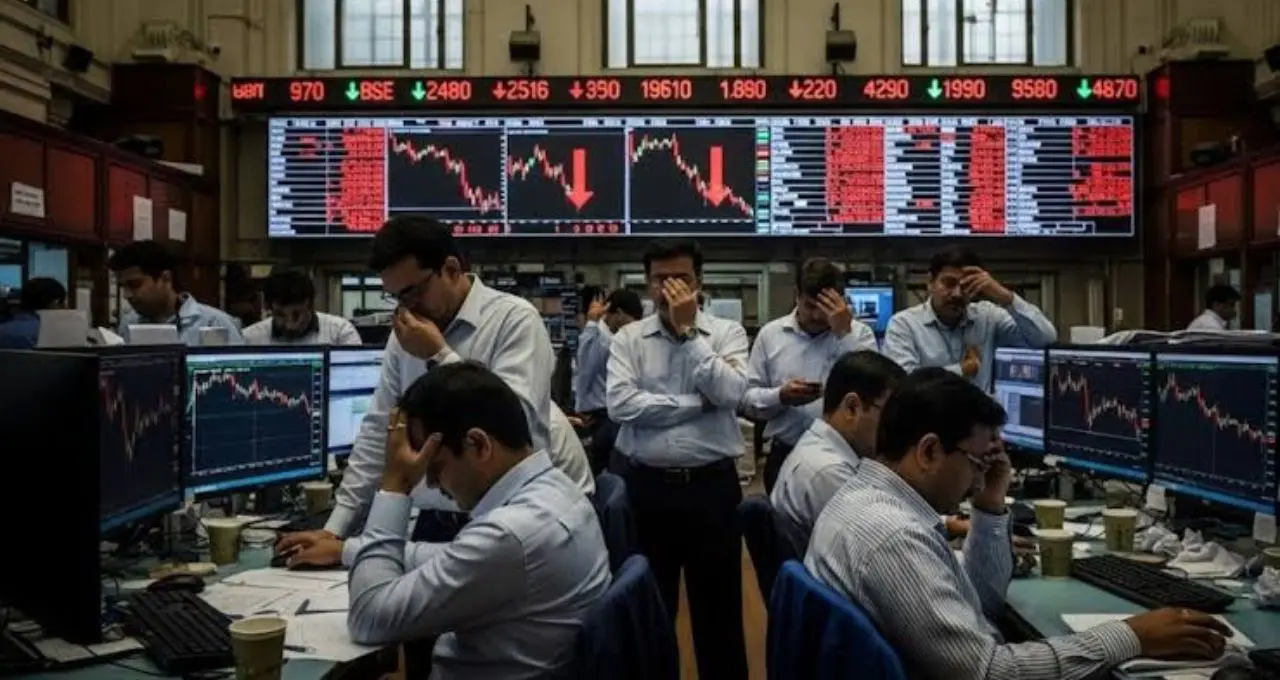
The IT sector remained one of the ber segments of the market amid the decline. The Nifty IT index gained more than 1.5% in early trade. Buying was seen in major IT stocks, including TCS, HCL Technologies, Tech Mahindra and Infosys. TCS shares were closely watched as the market focused on the company’s quarterly results. According to reports, TCS gained around 2.5%, supporting the IT index.
In contrast, sectors such as realty and metals, which are affected by interest rates and global economic conditions, remained under pressure. Higher crude oil prices and concerns over expensive global financing also affected market sentiment.
Shares of digital payments company One97 Communications, or Paytm, came under heavy selling pressure. The pressure on shares linked to the company increased following the RBI’s recent action concerning Paytm Payments Bank. The RBI removed Paytm Payments Bank from the list of scheduled banks.
The move followed the earlier action to cancel the bank’s licence. However, Paytm has clarified that its key services, including UPI, QR code payments, Soundbox, card machines and Payment Gateway, are not affected because these services operate through a multi-bank model.
In Thursday’s trading session, shares linked to digital payments companies, including Mobikwik and Pine Labs, also remained under pressure. Uncertainty related to the Merchant Discount Rate (MDR) for the sector also remained a subject of discussion in the market.