
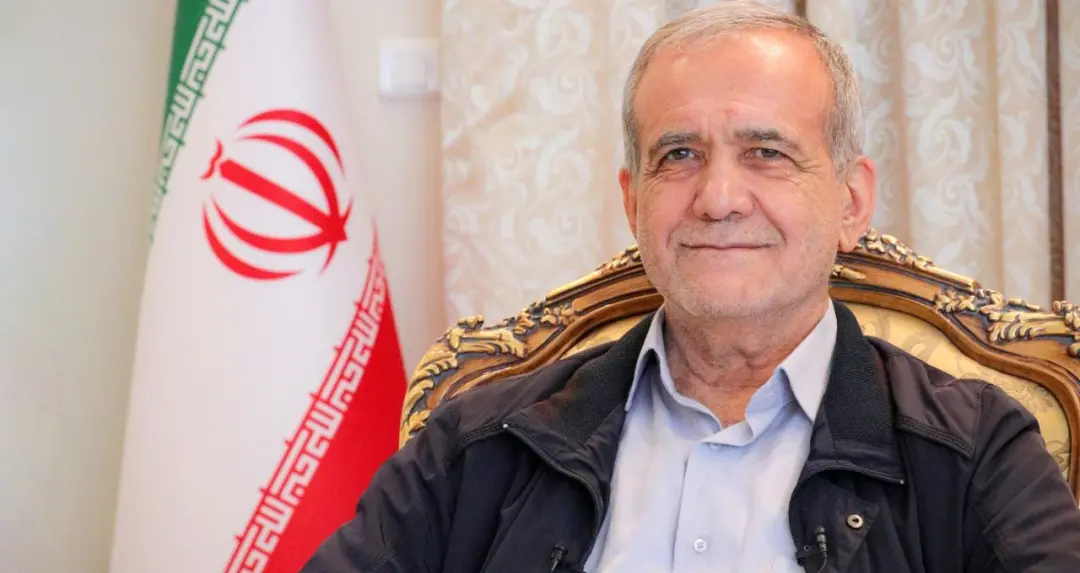
Iranian President Masoud Pezeshkian has said that Iran will neither yield to pressure arising from the threat of war nor close the door to diplomatic engagement amid the current geopolitical tensions. In a message posted on social media, he stated that Iran’s foremost priorities remain national security, sovereignty, and the peace of its citizens.
According to Pezeshkian, Iran remains fully vigilant regarding its defense capabilities and strategic interests while keeping channels for international dialogue and resolution open. He said that yielding to threats is not part of Iran’s policy.
The statement comes as tensions between Iran and Israel have escalated again across multiple fronts, contributing to instability in West Asia.
Recent reports indicate that Iran launched approximately 30 ballistic missiles toward Israel, after which Israel carried out retaliatory strikes targeting Iranian military facilities, air defense systems, and petrochemical plants.




Experts say the confrontation could have implications beyond the two countries, affecting regional security and global energy markets.
Amid the rising military tensions, the Government of India has issued an advisory urging its citizens to avoid non-essential travel to Iran. The Indian Embassy has also advised Indian nationals already present in Iran to consider safe options and closely monitor developments in the region.

In Yemen, Houthi rebels have announced that they will target vessels linked to Israel in the Red Sea. The declaration has raised concerns over potential disruptions to global maritime trade and oil supply chains. Experts have warned that a prolonged situation could increase pressure on international shipping and energy prices.
The Iran-Israel tensions have also affected global oil markets. Brent crude and WTI crude prices have continued to fluctuate in international trading. Brent crude is trading at around $94 per barrel, while WTI crude remains above $91 per barrel. Investors are concerned that any disruption to key routes such as the Strait of Hormuz could affect global oil supplies.
The uncertainty has contributed to volatility in energy markets and raised concerns about possible inflationary effects in several countries.
Diplomatic efforts are continuing alongside the tensions. According to Iran’s representatives at the United Nations, talks between the United States and Iran could reach a substantive outcome by the end of June.
While differences remain between the two countries on several issues, both sides have agreed to continue discussions. Experts say a successful outcome could help reduce tensions in the region.
Separately, 24 Indian nationals aboard an oil tanker were safely rescued following a missile attack in Omani waters. All crew members were evacuated safely through a joint operation conducted by the Indian Coast Guard and the Oman Navy.
The incident has highlighted the impact of ongoing tensions in West Asia on international maritime routes and civilian safety.
Meanwhile, a magnitude-5 earthquake struck southern Iran, with tremors felt in the Hormozgan and Kerman provinces. Initial reports have not confirmed any major damage or casualties, and local authorities continue to monitor the situation.
Reports have also indicated emerging differences between the top leadership of the United States and Israel regarding policies toward Iran and Lebanon. According to reports, disagreements have arisen between the US President and the Israeli Prime Minister over Lebanon. The United States is reported to be focused on preventing conflict and reducing tensions, while Israel’s military actions have added complexity to the situation.


