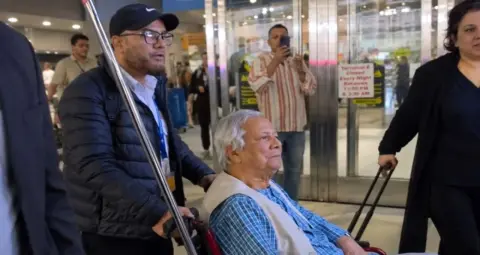
Upon arriving in Dhaka, S Jaishankar attended the funeral of Khaleda Zia and met with her son, Tarique Rahman. He also shared a message of condolence from PM Modi. However, his deliberate distance from and lack of meeting with Yunus quickly became a trending topic on social media, widely interpreted as a diplomatic strategy.
Dhaka: The recent visit by Indian Foreign Minister Dr. S Jaishankar to Dhaka is considered highly significant from a diplomatic perspective. During the visit, he participated in the funeral of former Prime Minister Begum Khaleda Zia and met with her son, Tarique Rahman, a leader of the BNP. A message of condolence from Prime Minister Narendra Modi was also shared on this occasion.
However, the most discussed aspect of the tour was S Jaishankar’s decision not to meet with Muhammad Yunus, the Chief Advisor of Bangladesh’s caretaker government. This move sent shockwaves through Dhaka’s political landscape and sparked rapid discussion on social media.



Distance from Yunus: Why it became an issue
The decision not to meet with Yunus was a step that stirred up Bangladeshi politics. Experts believe that this was not merely a visit to express condolences, but also an indication of India’s future strategy. India viewed Yunus, the Chief Advisor of Bangladesh’s caretaker government, as merely a temporary head and prioritized Tarique Rahman as a potential future leader. This distance signaled to the Bangladeshi caretaker government that India does not fully accept the current arrangement.
Significance of the meeting with Tarique Rahman

S Jaishankar’s meeting with BNP leader Tarique Rahman sent a clear message. Tarique Rahman is not only Khaleda Zia’s son, but is also seen as a potential future Prime Minister. During the meeting, India indicated that it is closely monitoring Bangladesh’s next political options. This diplomatic move is also considered important because Tarique Rahman has distanced himself from the Pakistan-backed Jamaat-e-Islami and focused on a Bangladesh-first policy.
India’s future strategy
Foreign policy experts believe that India, through its actions during the Dhaka visit, has made it clear that it pays attention not only to the current government but also to the possibilities of future leadership. By distancing himself from Yunus, India signaled that it is not entirely satisfied with the decisions of the caretaker government. At the same time, by engaging with Tarique Rahman, India has indicated support for the BNP and expressed the possibility of preparing for future bilateral relations.
Photos of S Jaishankar’s distance from Yunus and his meeting with Tarique Rahman went viral on social media. This sparked debate within political circles in Bangladesh. Many analysts believe that this move signals India’s clear policy of prioritizing stable and trustworthy leadership in Bangladesh.
The thinking behind the diplomatic message
In foreign policy, often the most important steps are those that are not visible. S Jaishankar’s visit to Dhaka is also such an example. He did not simply express condolences by attending the funeral, but also conveyed political and diplomatic messages with every step he took. The distance from Yunus was not just a personal decision, but a part of India’s strategy.