
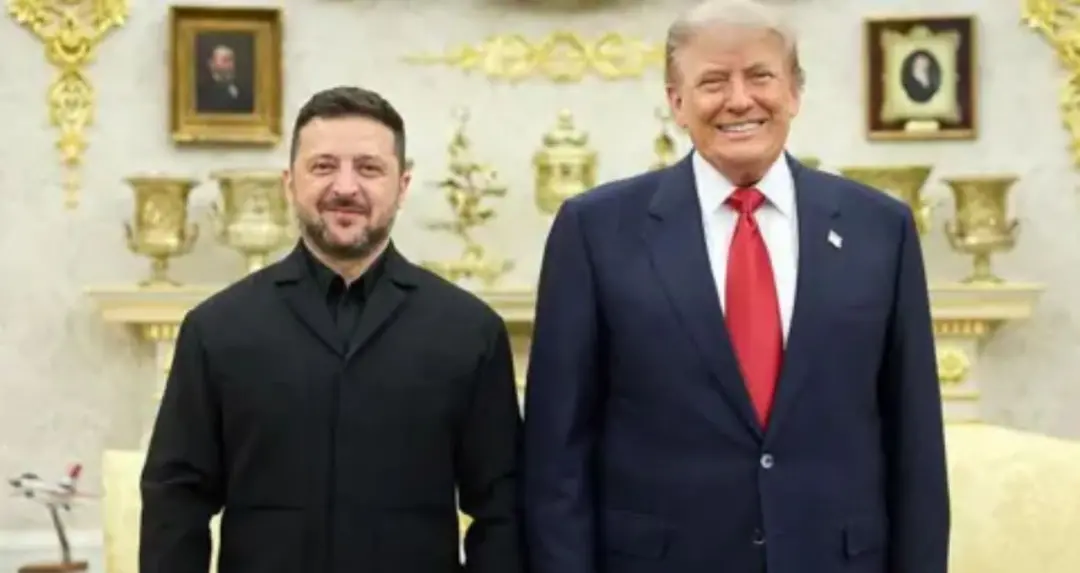
U.S. President Donald Trump separately met Ukrainian President Volodymyr Zelenskyy and Israeli Prime Minister Benjamin Netanyahu at the White House, where discussions focused on Ukraine's security, the Iran crisis, and evolving strategic developments in the Middle East.
The White House described both meetings as positive and constructive. The meetings took place amid the ongoing war between Russia and Ukraine and heightened tensions involving Iran in the Middle East. Both leaders had travelled to Washington to attend the funeral of U.S. Senator Lindsey Graham, who had long been a prominent supporter of U.S. assistance to Ukraine and support for Israel.
During his meeting with Trump, President Zelenskyy stressed the need to strengthen Ukraine's air defence capabilities. Ukraine has continued to seek advanced air defence systems following an increase in Russian drone and ballistic missile attacks in recent months.
Following the meeting, Zelenskyy said Trump had agreed to grant Ukraine a licence for the domestic production of Patriot interceptor missiles. He also said he held detailed discussions with representatives of U.S. defence companies on the subject and expressed hope that the two countries would move towards joint production. The U.S. administration has not made a formal announcement on the matter.
The Patriot air defence system is regarded as one of the world's most advanced defence systems. It is capable of intercepting ballistic missiles and long-range aerial attacks. Ukraine has sought the systems for an extended period in response to continued Russian missile strikes.




A single Patriot battery can simultaneously track multiple targets and intercept incoming threats. The system is costly, with each interceptor missile valued at several million dollars. Ukraine has stated that it requires a substantial number of such systems for its defence.
Before his White House meeting, Zelenskyy also met lawmakers from both parties in the U.S. Congress.
During the same period, the U.S. Senate gave b support to a proposal to impose sanctions on countries purchasing Russian oil and gas. Zelenskyy described the proposal as b political support for Ukraine, stating that such measures could increase economic pressure on Russia and strengthen international cooperation.
Following his meeting with Zelenskyy, Trump met Israeli Prime Minister Benjamin Netanyahu. Their discussions focused primarily on Iran's activities, regional security, and developments in the Middle East.
In recent months, differences had emerged between the United States and Israel on certain issues, particularly regarding military operations in Lebanon and approaches to a ceasefire. Despite those differences, both sides described the meeting positively.
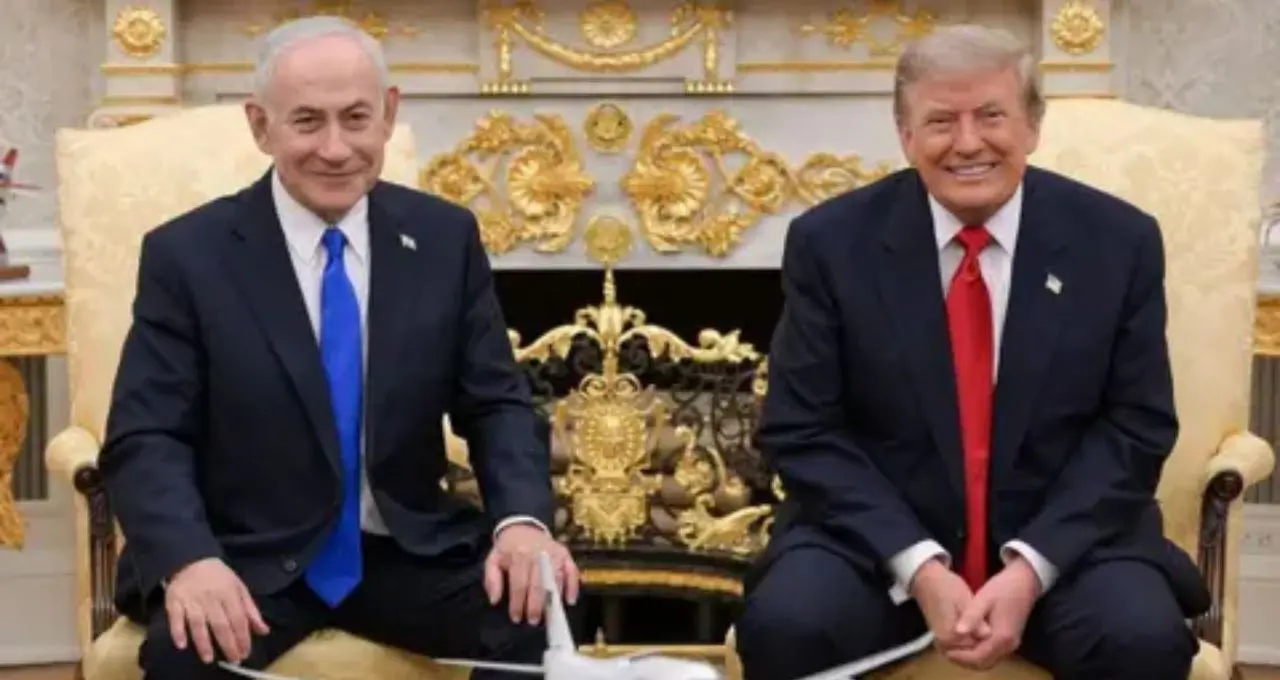
After the meeting, Trump said the discussions had gone very well. Netanyahu described the meeting as one of his most important discussions with the U.S. President.Netanyahu said after the meeting that both countries had reached a clear understanding that Iran must not be allowed to acquire nuclear weapons.
He also indicated that several other significant issues concerning regional security and future strategy were discussed during the meeting.
Shortly after the meetings, the U.S. military claimed that Iranian forces attempted to launch a missile attack on U.S. military bases deployed in the Middle East, but the attempt was successfully thwarted.
According to U.S. officials, all incoming missiles were intercepted before reaching their targets.
During the same period, U.S. and Saudi forces conducted operations in eastern Iraq against Iran-backed groups accused of carrying out drone attacks on Saudi energy facilities.
Iran had not issued an immediate official response to those claims.
The meetings between Trump, Zelenskyy and Netanyahu took place as multiple international security challenges continue simultaneously, including the ongoing war in Ukraine and heightened tensions involving Iran, Israel and the United States in the Middle East.
Zelenskyy said that if Ukraine receives approval for the joint production of Patriot missiles, it could strengthen the country's defence capabilities. Netanyahu said the discussions reaffirmed the shared position of the United States and Israel that Iran should not obtain nuclear weapons.


