

Military tensions between the United States and Iran have escalated sharply amid competing claims of air strikes, drone attacks and military incidents near the Strait of Hormuz.
According to reports, the latest dispute began near the Strait of Hormuz, one of the world's most important oil transit routes. The two countries exchanged accusations over the activities of U.S. Apache helicopters and Iranian drones in the area.
The U.S. Central Command (CENTCOM) claimed that one of its AH-64 Apache helicopters was damaged as a result of Iranian action, leading to a rapid deterioration in the situation. Iran, however, presented a different account, stating that the incident may have resulted from a technical collision or a drone-related accident.
Following the rise in tensions, the United States conducted air strikes against Iran. According to the U.S. military, the operation was retaliatory and aimed at facilities considered a threat to U.S. military and commercial vessels.




Reports said U.S. fighter aircraft carried out precision strikes on Iranian air defense systems, ground control stations and surveillance radar sites. The operation was concentrated near the Strait of Hormuz, a strategically significant route for global oil supplies.
Former U.S. President Donald Trump claimed that the attack on the American helicopter was part of Iranian actions and said the United States had to respond. He also indicated that Washington could further strengthen its military posture in the coming days.
Iran's Islamic Revolutionary Guard Corps (IRGC) claimed it launched retaliatory drone attacks targeting U.S. military facilities and a key naval base in Bahrain.
Iran also claimed it had shot down a U.S. MQ-9 Reaper drone, although the U.S. military has not officially confirmed the claim. Tehran said the action was carried out in response to attacks on its regional facilities.
Iranian Foreign Minister Abbas Araghchi warned that Iran would respond more forcefully if U.S. attacks continued. He said violations of regional sovereignty would not be accepted under any circumstances.
Amid the tensions, air raid sirens were activated in Bahrain and residents were advised to move to safe locations. The measures followed Iran's claim that it had targeted the U.S. Navy's Fifth Fleet stationed in Bahrain with drones.
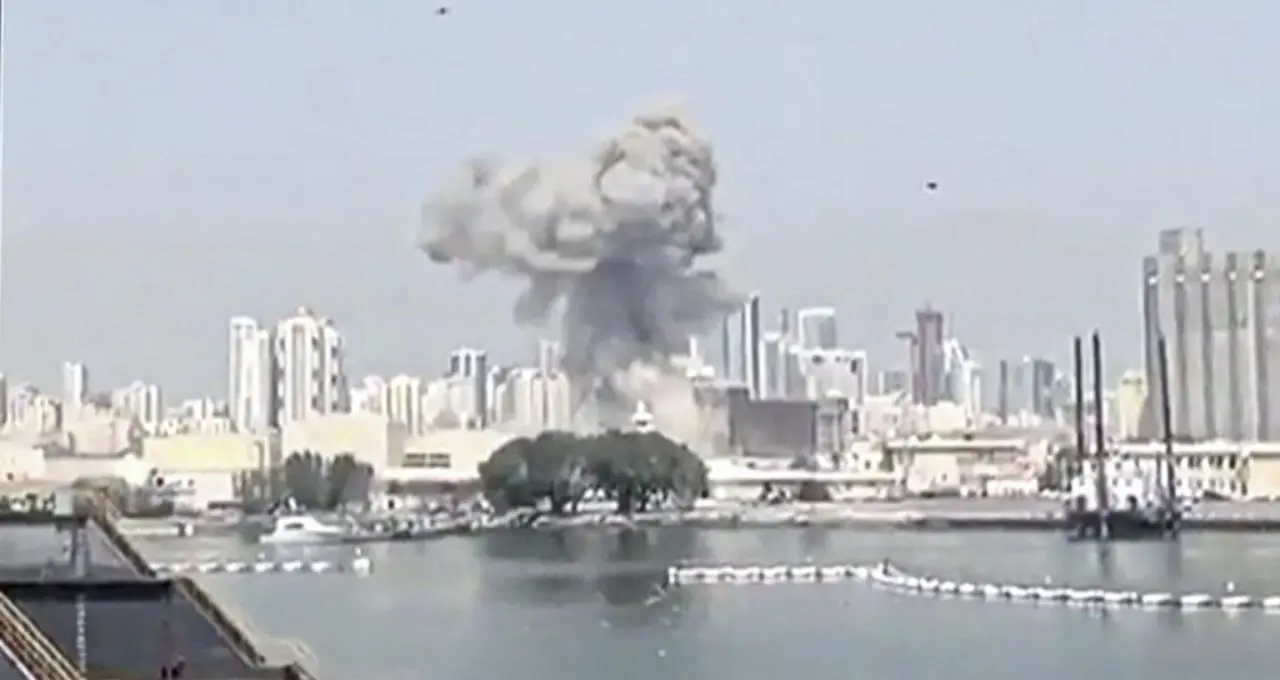
The U.S. Fifth Fleet, based in Bahrain, is regarded as one of Washington's most significant maritime deployments in West Asia and is responsible for monitoring the Persian Gulf and surrounding strategic waterways. The U.S. Department of Defense has not confirmed the reported attacks.
The Strait of Hormuz remains the central focus of the confrontation. The waterway handles a significant share of the world's crude oil shipments, and any military tensions in the area can directly affect global energy markets.
Recent market data showed crude oil prices rising by about 1%, with gains recorded in both Brent crude and West Texas Intermediate (WTI), indicating investor concerns about regional stability.
Israel has also remained a significant factor in the developments. The Chief of Staff of the Israeli military stated that larger attacks against Iran could be carried out if necessary, adding that recent operations represented only the beginning of a broader military strategy.
Meanwhile, U.S. Vice President JD Vance indicated that Iran appeared willing to engage in talks and said the possibility of a diplomatic solution remained open.
At a political rally, Donald Trump claimed that the United States could announce a “complete victory” against Iran within the next two weeks. His remarks have drawn international attention and intensified discussion surrounding the situation.
Experts said such statements could influence the global diplomatic environment and further complicate an already tense situation.


