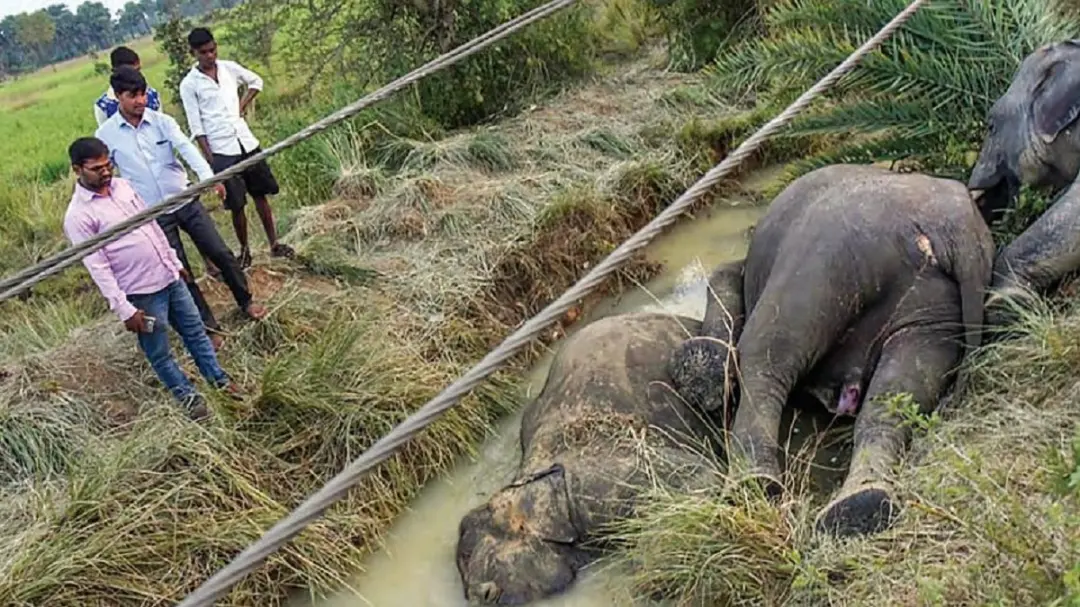
A wild elephant died after coming into contact with an electrically charged wire fence installed around a house and agricultural field in the Kushitola Paranadi area of Komar village under Jhabar panchayat in Balumath block of Latehar district, Jharkhand. The fence had been installed by a villager to protect the house and crops from repeated elephant incursions. The Forest Department has reached the site and started an investigation.
The incident occurred in an area where wild elephants have repeatedly entered villages and damaged crops. About five days before the elephant's death, a herd had entered Komar village and caused damage to a house belonging to Bifa Oraon, who was sleeping inside with his wife and child at the time.
The family heard the elephant approaching the house and causing damage during the night. They managed to leave the house and save themselves. The elephant subsequently damaged part of the house and consumed grain stored inside.
The herd then moved towards nearby agricultural fields and trampled the maize crop near Bifa Oraon's house, destroying a substantial portion of the crop. Fearing that the elephants would return, the family installed a fence on three sides of the house to protect the property and crops. Electricity was later supplied to the fence.




A herd of around 15 elephants was reportedly present in the area on Sunday night. Forest Department trackers and other personnel monitored the elephants' movements and attempted to keep them away from the village until around 2 am. They managed to drive the elephants away from the village for some time, but the herd later returned.
During the herd's return, one elephant moved towards the villager's maize field and came into contact with the previously installed electrified wire. The elephant died at the spot after receiving an electric shock.
News of the elephant's death spread through the area in the morning, after which a large number of villagers gathered at the site. The Forest Department and police were informed, and officials and personnel reached the location. The Forest Department inspected the site and began investigating the installation of the electrified wire and other aspects of the incident.
Officials said the actual cause of the elephant's death and the complete circumstances of the incident would become clear after the investigation. Forest Committee president Sunil Oraon said villagers had previously been warned against installing electricity wires in such a dangerous manner in agricultural fields. He said the elephant died because of the electrified wire.
The incident has also raised concerns about the risks associated with measures used by villagers to protect crops from wild elephants. Electrified wires around fields can pose a serious danger not only to wildlife but also to villagers and livestock.
Forest Department personnel were continuously monitoring the presence of elephants in the area when the incident occurred. It was reported that if forest workers had reached the site while trying to drive the elephants away, they could also have come into contact with the electrified wire. The incident has therefore created an additional safety challenge for the Forest Department while managing elephant movements near villages.
Forest Department ranger Nand Kumar Mehta said the team reached the site after receiving information about the incident and had started an investigation. The elephant's carcass will undergo a post-mortem examination. All facts related to the death will be confirmed only after the post-mortem report and inspection of the site. Further legal action will be taken on that basis. The Forest Department is also investigating how the electric wire was installed and where the electricity supplying the wire was sourced.
Balumath and surrounding areas are known for the movement of wild elephants. Herds periodically leave forests and enter villages and agricultural fields, where they have damaged crops and houses. At the end of August, a herd of wild elephants reportedly damaged two houses and destroyed crops across several acres of agricultural land in Dhadhu village in the Balumath forest area. Such incidents have contributed to continued fear among villagers regarding elephant incursions.
Villagers face the dual concern of protecting their lives and crops from wild elephants while also avoiding dangerous methods of preventing elephant entry. In this case, the house and maize crop had already been damaged by elephants, following which the family installed an electrified fence because of fears of another incursion. The fence ultimately caused the death of an elephant.
Villagers said repeated elephant incursions have left them concerned about the safety of their homes, children and crops. They said the Forest Department should continuously monitor elephant movements and provide villagers with information about safe methods of keeping elephants away from settlements. They said effective arrangements could reduce the need for villagers to adopt risky measures themselves.
The Forest Department's investigation and the post-mortem examination will establish how the electrified fence was installed and what action may be taken in connection with the incident. The department is also monitoring the movements of the elephant herd because the presence of other elephants in the area continues to pose a risk to villagers. People in surrounding villages are being advised to remain alert.
The Latehar incident highlights the continuing conflict between people and wild elephants. Villagers are concerned about protecting their homes and crops, while increased elephant movement around villages has resulted in repeated incidents. Electrified wires used around fields and houses can be fatal to people, livestock and other wildlife, making safety measures for villagers and elephant conservation an ongoing concern for the Forest Department and local administration.