
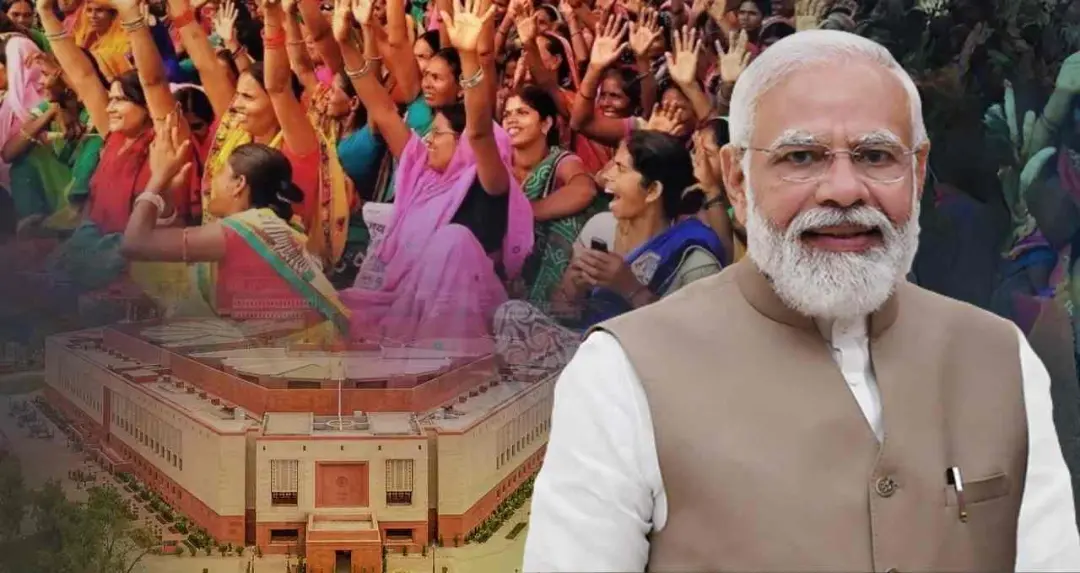
The Women’s Reservation Act, 2023, providing 33 percent reservation for women in the Lok Sabha and state legislative assemblies, has come into force from Thursday following a notification issued by the Union Ministry of Law and Justice.
The Government of India notified that the ‘Women’s Reservation Act, 2023’ will be implemented across the country with effect from April 16, 2026. The Act provides for reserving one-third of seats for women in the Lok Sabha and all state legislative assemblies.



The government clarified that the actual implementation of the reservation will not take place immediately and will become operational only after the completion of the census and the delimitation process. It is estimated that the provisions may come into effect during the 2029 general elections or thereafter.
According to the notification issued by the Union Ministry of Law and Justice, the central government, in exercise of the powers conferred under Section 1(2) of the Constitution (106th Amendment) Act, 2023, has appointed April 16, 2026, as the date on which the Act shall come into force. The official statement said that while the law has formally taken effect, its provisions cannot be applied to the current Lok Sabha or state legislative assemblies.
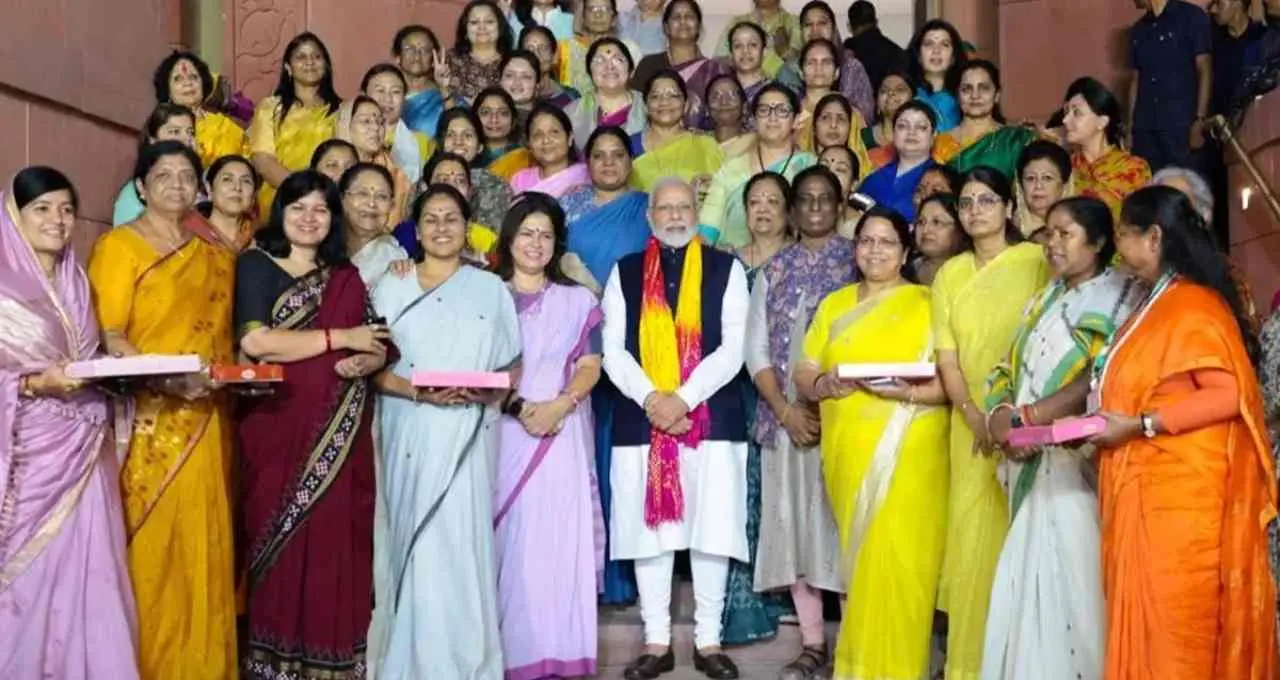
Also referred to as the ‘Nari Shakti Vandan Adhiniyam’, the law aims to increase the participation of women in India’s democratic institutions. It provides for 33 percent reservation of seats for women in the Lok Sabha and all state legislative assemblies, to be implemented through a rotational system.
The Act was passed by Parliament in September 2023.
Government officials stated that despite the law coming into force, its practical implementation is not immediately feasible due to requirements linked to the census and delimitation processes. A senior official said that reservation cannot be implemented without restructuring constituencies under the existing political framework. The delimitation process will determine the reallocation of seats based on updated population data.
Sources indicated that the process is expected to be completed after the 2027 census, following which the reservation provisions may be implemented in the 2029 general elections.
The issue continues to be under discussion in Parliament. The government has introduced certain bills aimed at ensuring time-bound implementation of the reservation. The ongoing political discourse includes whether to amend the 2023 law to facilitate its implementation from 2029 through a formal process. Experts stated that this would constitute a structural change in India’s democratic framework and increase women’s representation in Parliament and state assemblies.


