An earthquake of magnitude 4.5 was recorded in Assam’s Nagaon district early Tuesday, according to the National Centre for Seismology (NCS). The earthquake occurred at 4:23:47 a.m., with its epicentre located at a depth of approximately 33 kilometres below the Earth’s surface.
The seismic activity was recorded by the NCS at around 4:23:47 a.m. Tuesday. As the tremors occurred in the early morning, when most people were asleep, they were felt by several residents in the affected areas. Some areas reported a sense of fear following the tremors.




No official information has so far been reported regarding any deaths, injuries or property damage. Local authorities and relevant agencies are monitoring the situation, while any damage, if present, may be assessed at the local level.
The earthquake struck at a time when most people were inside their homes and asleep. The sudden tremors caused concern among residents, particularly in areas considered vulnerable to seismic activity. However, there has been no information about any major damage so far.
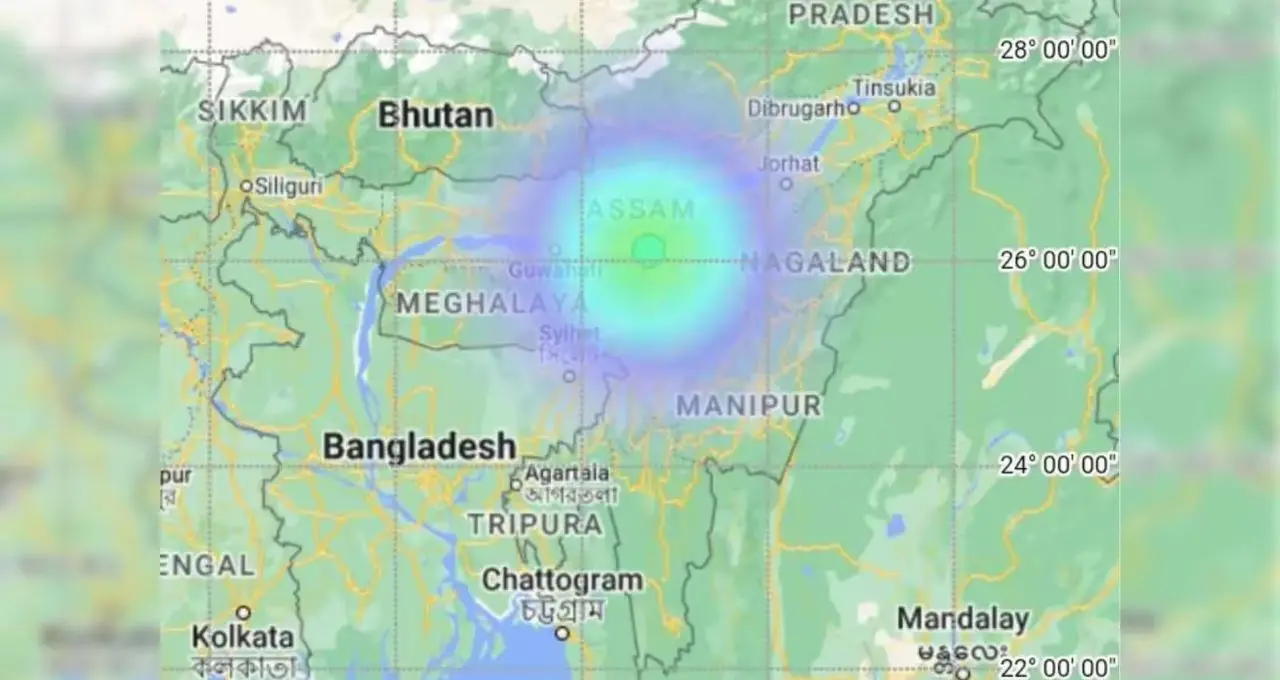
Assam and other parts of northeastern India experience earthquakes from time to time. Earlier on Saturday evening, an earthquake of magnitude 4.9 was recorded in parts of northeastern India. According to the NCS, the epicentre of that earthquake was located around three kilometres from Gyalpozhing in Bhutan, at a depth of approximately five kilometres below the Earth’s surface.
The Saturday earthquake was recorded at around 4:01 p.m. Tremors were felt in Assam, including Guwahati, and some surrounding areas. No major loss of life or property was reported in that incident either.
Northeastern India is among the regions in the country with significant seismic activity. Earthquakes are periodically felt in Assam, Manipur, Meghalaya, Nagaland and surrounding areas. The region’s geographical structure and activity along tectonic plates are among the factors associated with seismic activity in the area.
The magnitude of an earthquake alone does not determine the extent of damage. Other factors include the depth of the epicentre, its distance from populated areas and the structural strength of buildings in the affected location.