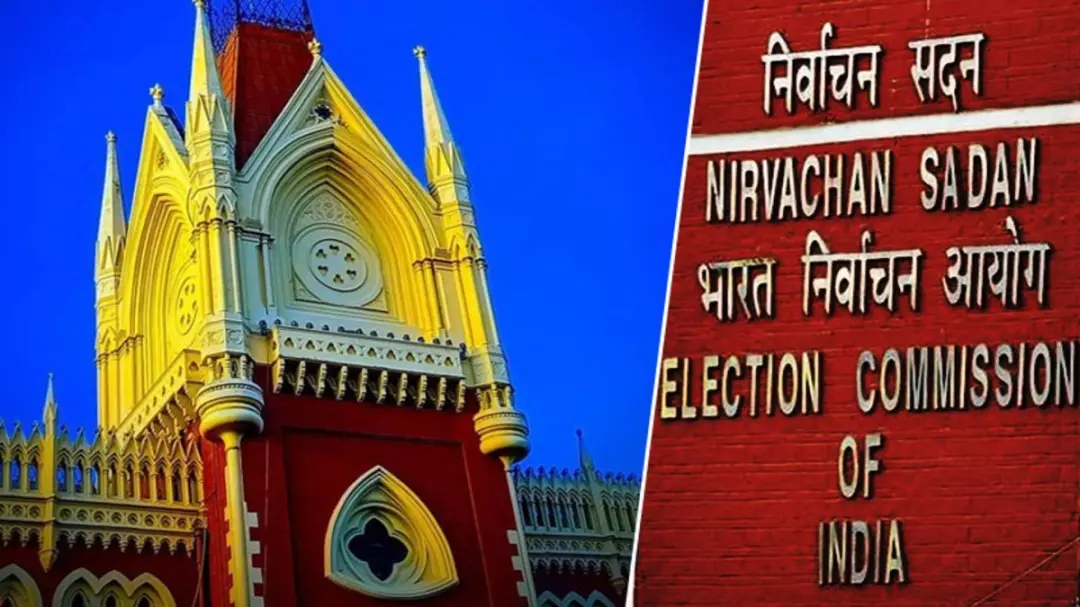
The dispute over the allocation of the ‘Envelope’ election symbol ahead of the West Bengal Assembly bypolls has reached the Calcutta High Court. The court has raised several questions over the Election Commission’s process in allocating the symbol, previously used by the Indian Secular Front (ISF), to the Democratic Trinamool Congress. During the hearing, the court sought to know why the ‘Envelope’ symbol was allotted to another party when a large number of other free symbols were available with the Commission. After the hearing concluded, Justice Krishna Rao reserved his judgment on September 28.
The dispute relates to the bypolls to the Nandigram and Rejinagar Assembly seats in West Bengal, where voting is scheduled for October 6, 2026. The issue emerged after the Election Commission allotted the ‘Envelope’ symbol to the breakaway faction of the Democratic Trinamool Congress, or TMC. The ISF said it had been using the symbol and that its candidates were also contesting the bypolls. It argued that allotting the same symbol to another political party in the same electoral area could create confusion among voters.
ISF MLA Naushad Siddiqui challenged the Election Commission’s decision before the Calcutta High Court. The petition questioned the Commission’s allocation of the ‘Envelope’ symbol to another party. The ISF argued before the court that the party had been using the symbol for a long time and had also applied for it for the upcoming bypolls. It said that allocating the symbol to another party immediately before the election could affect its electoral identity.
During the hearing, the Calcutta High Court repeatedly questioned the Election Commission’s decision-making process. The court asked how the Commission determines which party should receive an election symbol when two parties apply for the same symbol. It also sought to know what reasons were recorded for selecting the ‘Envelope’ symbol for the Democratic Trinamool Congress. Justice Krishna Rao asked the Commission to clarify the actual basis for its decision.




The court’s comments became more pointed when Justice Krishna Rao questioned what meaning the Election Commission’s independent role would have if it acted on the instructions or influence of a private party. The observation was made in the context of an alleged situation suggesting possible collusion between the Election Commission and the other party, but it was not the court’s final finding. The court primarily focused on obtaining clarity on the Commission’s decision-making process and the basis for its decision.
The court also asked the Election Commission’s counsel why the ‘Envelope’ symbol had been selected when a large number of free election symbols were available. During the hearing, it was stated that the Commission had around 183 free election symbols available. The court therefore sought to understand why the symbol previously used by the ISF, whose candidates were also contesting the same bypoll, had been allotted to another party.
The court also stressed the importance of fairness and transparency in the electoral process. The substance of Justice Krishna Rao’s observations was that decisions taken by a constitutional institution in connection with elections should be clear and should not create circumstances in which political parties are required to approach the court during an election. The court also questioned whether disputes arising after the election process has begun place an additional burden on the judicial process.
During an earlier hearing on September 24, the Calcutta High Court had also asked the Election Commission to explain the reason for allocating the ‘Envelope’ symbol to the Democratic Trinamool Congress. The court had asked the Commission to provide the basis for its decision. Further hearings followed, during which the Commission presented arguments on the rules governing the allocation of election symbols and its procedure.
The Election Commission argued before the court that no political party has permanent ownership of a free election symbol. The Commission also said that a party cannot be considered to have a right to use the same free election symbol continuously beyond a specified limit. Its argument was that the ‘Envelope’ symbol is not the permanent property of any party and can be allotted under the applicable rules. The ISF, on the other hand, stressed that its candidates were contesting the election with the same symbol and that the party’s identity had been associated with the symbol in previous elections.
The dispute has also assumed significance because election symbols are a primary means of identification for political parties and candidates in the Indian electoral system. Particularly for voters who identify a party or candidate by the election symbol rather than the candidate’s name, a change in symbol or the presence of the same symbol in the same electoral context can create confusion. The ISF therefore argued before the court that the Commission should take into account the existing electoral context and the status of candidates in the concerned constituency while allocating an election symbol.
The position of the Democratic Trinamool Congress is also relevant to the dispute. The party is associated with a political faction that separated from the Trinamool Congress and has been allotted the ‘Envelope’ election symbol for the upcoming bypolls. According to available reports, the party was given several options for an election symbol, including an envelope, pencil box and torch. The Commission ultimately allotted the envelope symbol. The ISF objected to this allocation and approached the High Court.
The ISF has said that the ‘Envelope’ is not merely a general election symbol for the party but has formed part of its political identity in previous elections. According to reports, the party used the symbol in the 2021, 2024 and 2026 elections. The Election Commission’s position, however, is that no party has a permanent right over a free symbol. The difference between the two positions has led to the legal dispute, and the High Court will now examine the basis on which the Commission took its decision after considering the applicable rules and circumstances.
The court also examined how the Election Commission considered the ISF’s application. During the September 28 hearing, Justice Krishna Rao questioned why the Commission allotted the same symbol to another party despite the ISF having applied for the ‘Envelope’ symbol on September 17. The court sought to understand the decision-making process and the reasons available on record.
After the hearing concluded, the court reserved its judgment. The High Court has not yet issued a final decision on which party should receive the ‘Envelope’ election symbol. The final order is now awaited. The court’s directions regarding the Election Commission’s allocation of the symbol could have an impact on the electoral process for the upcoming bypolls.
The Nandigram bypoll is already considered significant in West Bengal politics, and the dispute over the election symbol has emerged ahead of the vote. However, the final legal outcome of the dispute is yet to be determined. The High Court’s decision will clarify whether the Commission’s existing allocation remains in place or whether any change is ordered.
The court proceedings have so far made clear that the High Court has sought a detailed response from the Election Commission regarding the process for allocating the election symbol and has focused on the specific basis for its decision. The court has also commented on the need for decisions to be taken with regard to the Commission’s constitutional role and impartiality. All parties are now awaiting the judgment reserved by the High Court.