During excavations in Bansiyal village, Jhunjhunu district, Rajasthan, significant evidence of a nearly 4,500-year-old civilization has been discovered. Materials such as walls made of lime powder, copper rings, bone tools, and ornaments indicate the existence of an advanced and organized life here.
Jaipur: Ongoing excavation work in Bansiyal village, located 65 kilometers from Rajasthan's Jhunjhunu district, has opened new doors to history. The unearthed remains suggest that this region was a crucial center of a Chalcolithic culture approximately 4,500 years ago. The excavation has yielded items like walls built with lime powder, copper rings, bone tools, and ornaments, which indicate the presence of an advanced and organized social life at that time.
According to archaeologists, this site is linked to the Ganeshwar civilization, and its people engaged in trade with the Harappan civilization. Evidence of their cultural connections with Gujarat, Haryana, and other parts of Rajasthan has also been found. This long-term research project, being conducted with the permission of the Archaeological Survey of India, commenced excavations in October after four years of surveys, now revealing invaluable glimpses of ancient culture.
Advanced Waste Disposal System




The circular pits found at the site demonstrate the well-organized waste management system of this settlement. Remains of bones and pottery discovered in these pits indicate that people systematically disposed of daily waste.
Notably, the waste pits were kept covered, which clearly shows that the people of that era were conscious of hygiene and settlement management. This also sheds light on ancient societal techniques that, in some ways, appear connected to today's modern waste management systems.
Strong Evidence of Trade
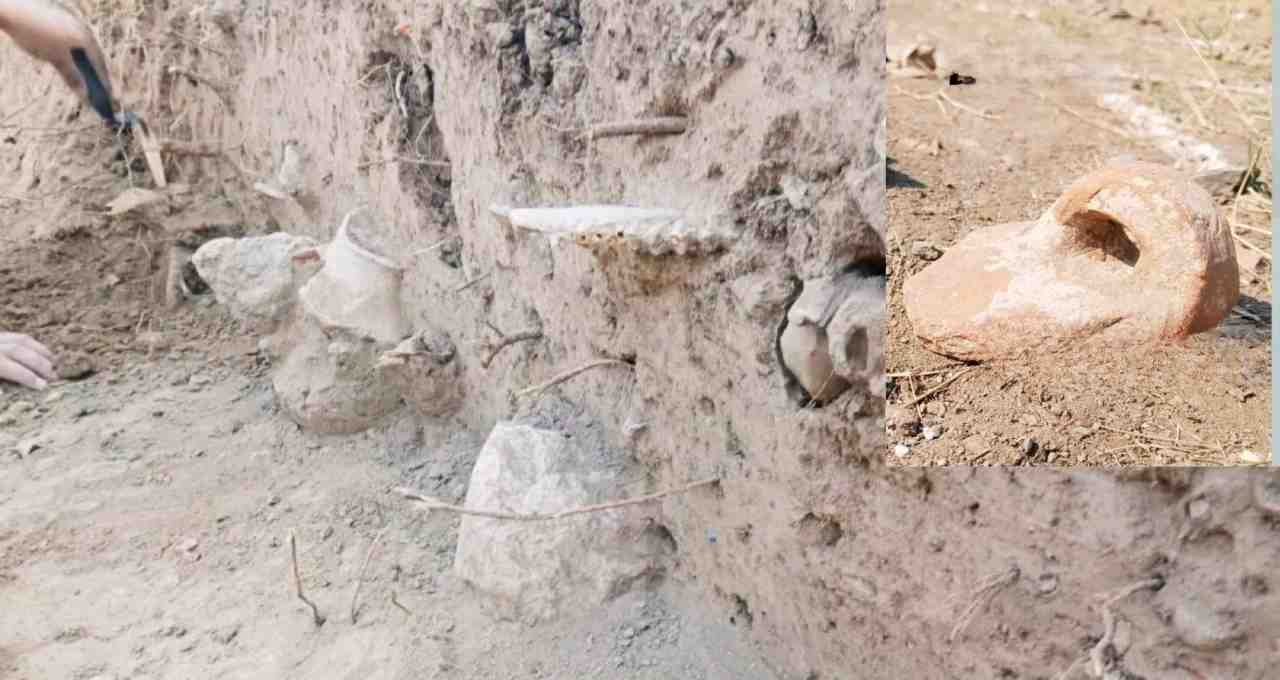
The excavation has uncovered carnelian stone beads, which are b indicators of ancient trade relations. Such beads were typically found in the Gujarat region, clearly showing that this Bansiyal settlement was commercially connected to civilizations in Gujarat.
Along with beads, copper objects and a special type of steatite material have also been found here. This suggests that the region was not solely dependent on local manufacturing but was part of active economic exchanges with distant areas.
Unique Evidence of Settlement Structure
Researchers have reported that for the first time, the structural outlines of houses within the settlement have been revealed. The excavation uncovered a distinct hut and an associated platform, indicating an advanced understanding of ancient domestic architecture.
These structures have also clarified that the society here was established in a planned manner. The arrangement of living spaces, workplaces, and waste management points towards a systematic settlement system.
Pottery and Household Items
Red-colored pottery, handled vessels, and useful household items demonstrate the developed pottery techniques and aesthetic sense present here. The handles and designs found on these pots are evidence of the advanced state of craftsmanship of that era.
Additionally, bone and copper tools, ornaments, and decorative items have been found, bly reinforcing that the Bansiyal civilization was not only technologically capable but also socially and culturally rich.