
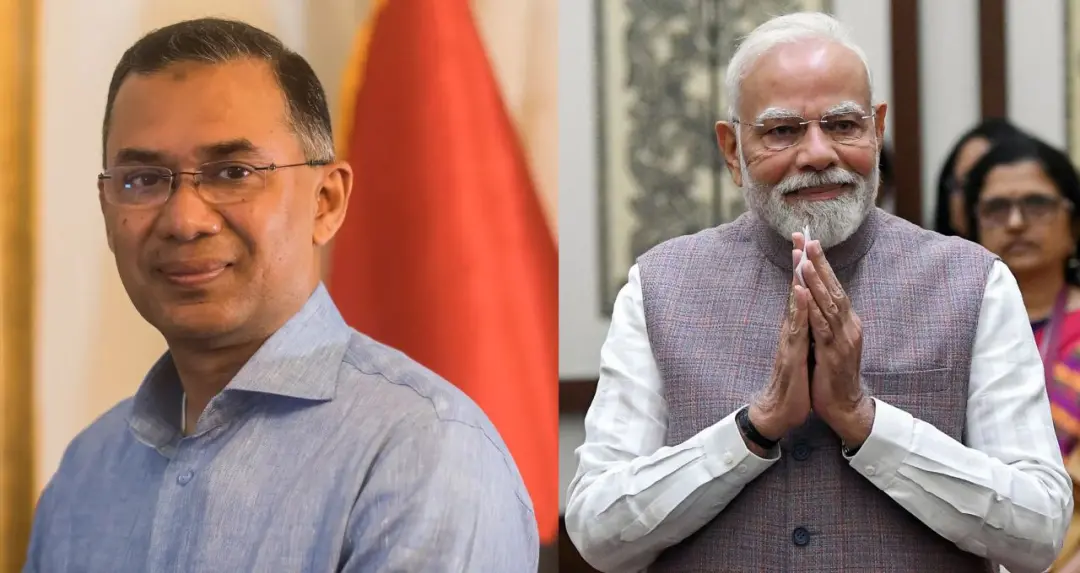
Bangladesh has expressed its desire to reset bilateral relations with India. State Minister for Foreign Affairs Humayun Kabir said the two countries should develop a relationship based on mutual interests and a balanced approach. He described relations during Sheikh Hasina’s tenure as prime minister as uncomfortable and stressed the need for direct bilateral dialogue between Dhaka and New Delhi.
Humayun Kabir said on Sunday that Bangladesh wants to reset its relations with India and develop a new relationship based on mutual interests and shared priorities.
According to Kabir, India and Bangladesh should focus on direct bilateral dialogue to take their relationship forward. He said discussions should take place directly between the two countries rather than through a multilateral platform.
Kabir also said Bangladesh needs to move away from an approach that places excessive focus on its relationship with India. Dhaka should view its ties with New Delhi as part of its broader foreign policy.
Humayun Kabir said Bangladesh needs to take a balanced approach to its relationship with India. According to him, mutual interests should form the basis of cooperation between the two countries.
He also indicated that Bangladesh’s foreign policy is not limited to its relations with India. Ties with New Delhi are one part of Dhaka’s broader relations with other countries.



Kabir described India-Bangladesh relations during Sheikh Hasina’s tenure as prime minister as uncomfortable. His remarks came amid tensions that have persisted between the two countries in recent times.
Bangladesh’s statement on resetting relations with India came after the BRICS summit was held in India. Bangladesh Prime Minister Tariq Rahman did not attend the summit.
Dhaka had said that Tariq Rahman was not invited in an individual capacity. According to Bangladesh, he was invited in his capacity as chair of BIMSTEC.
BIMSTEC is a regional organisation comprising seven countries from South and Southeast Asia connected to the Bay of Bengal. Its objective is to promote economic development, regional cooperation and shared interests among member countries.
Tariq Rahman’s absence from the BRICS summit was also viewed in the context of the existing India-Bangladesh relationship. Bangladesh has now stressed the need to advance direct bilateral dialogue with India.
Before the BRICS summit, India had invited Prime Minister Tariq Rahman to India for a bilateral meeting. His visit was proposed for August 22, but the programme was postponed before the trip.
At the time, Bangladesh had raised the issue of former Prime Minister Sheikh Hasina’s extradition with India. The extradition issue has remained a major source of tension between the two countries.
Bangladesh has long demanded that Sheikh Hasina be sent back. Her presence in India and Dhaka’s demand for her extradition have made diplomatic relations between the two countries sensitive.
At that time, State Minister for Foreign Affairs Humayun Kabir had also presented Bangladesh’s position on tensions between the two countries and the issue involving Hasina.
A virtual press conference by Sheikh Hasina from Delhi was also a factor in rising tensions between India and Bangladesh.
On August 5, Sheikh Hasina held a virtual press conference from Delhi. The event was organised on the second anniversary of the Awami League government’s removal from power. During the programme, she answered questions from journalists and spoke on several issues related to Bangladesh’s politics.
The Bangladesh government bly objected to the programme. Dhaka said that Hasina making political statements publicly while staying in India could be detrimental to efforts to normalise relations between the two countries.
Bangladesh’s Ministry of Foreign Affairs had claimed that it had already cautioned India about the matter. Despite this, Hasina was allowed to hold the press conference.
India declined to stop Sheikh Hasina’s press conference. The Indian side said the programme was organised by a private media organisation and had no connection with the Government of India.
The development further highlighted the differences that already existed between the two countries. Bangladesh objected to Hasina’s political statements, while India distanced itself from the programme.
Against this backdrop, the Bangladesh foreign minister’s emphasis on establishing relations with India afresh comes as Dhaka calls for a reset in bilateral ties.
Humayun Kabir’s statement indicates that Bangladesh is seeking a new approach to dialogue with India. Dhaka has emphasised direct bilateral contact so that the two countries can discuss their differences and shared interests directly.
India and Bangladesh have long cooperated on issues including trade, border management, water resources, connectivity and security. However, political developments and the issue of Sheikh Hasina’s extradition have posed challenges to relations in recent years.
Regular and direct dialogue between the two countries could therefore play a role in determining the future course of bilateral engagement. Bangladesh’s latest position emphasises advancing relations with India on the basis of mutual interests and a balanced diplomatic approach.


