
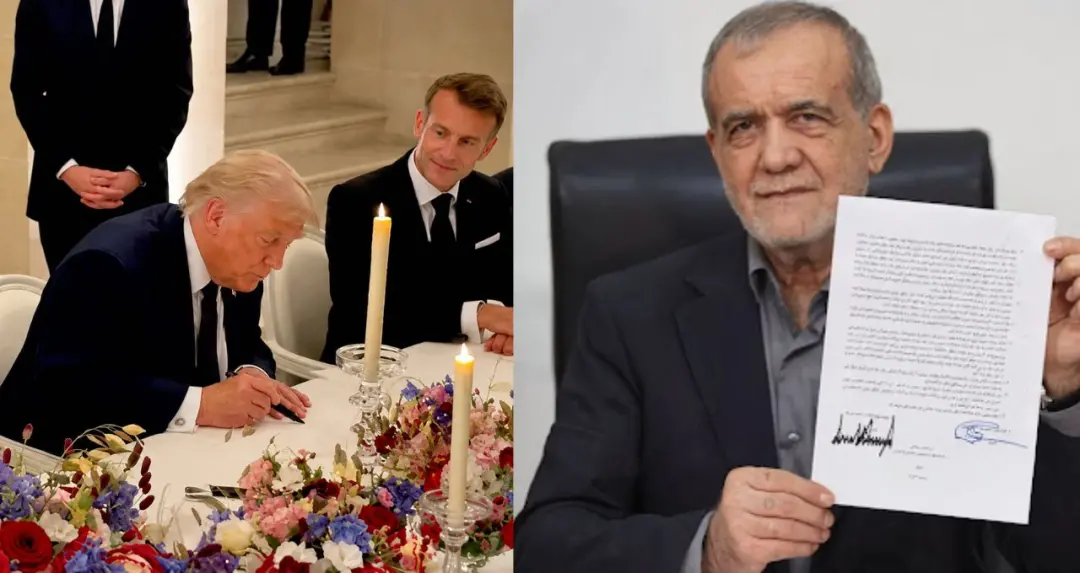
A claim has emerged that an interim peace agreement (MoU) aimed at ending hostilities between the United States and Iran was signed at the Palace of Versailles in France. The document was reportedly signed by former U.S. President Donald Trump, while Iranian President Masoud Pezeshkian approved it through electronic means.
According to reports, the stated objective of the agreement is to end the long-running tensions and military confrontation between the United States and Iran. The reported provisions include implementation of a ceasefire, removal of maritime blockades, and the reopening of the strategic Strait of Hormuz. The agreement is also claimed to include understandings related to reducing regional conflicts and the possibility of relief from economic sanctions.




The signing ceremony reportedly took place at the Palace of Versailles in the presence of French President Emmanuel Macron. It was stated that the U.S. side signed the document directly, while Iran provided approval through digital means. Following the ceremony, the development was promoted as a historic diplomatic moment.
Donald Trump claimed that the agreement fulfilled all major U.S. objectives, including ending the conflict and preventing Iran from developing nuclear weapons. He also warned that strict action could be taken again if Iran violated the terms of the agreement.
The reported agreement has drawn differing political reactions within the United States. Several Democratic Party leaders criticized the arrangement, arguing that it did not constitute a sufficiently firm approach. Senate leader Chuck Schumer and other lawmakers stated that the agreement had not delivered the strategic advantages expected by the United States and could prove controversial.
Reactions within Iran have also been mixed. Some lawmakers described the agreement as a diplomatic opportunity, while others expressed caution about trusting the United States. They argued that, based on past experience, the signing of an agreement alone does not guarantee lasting peace.
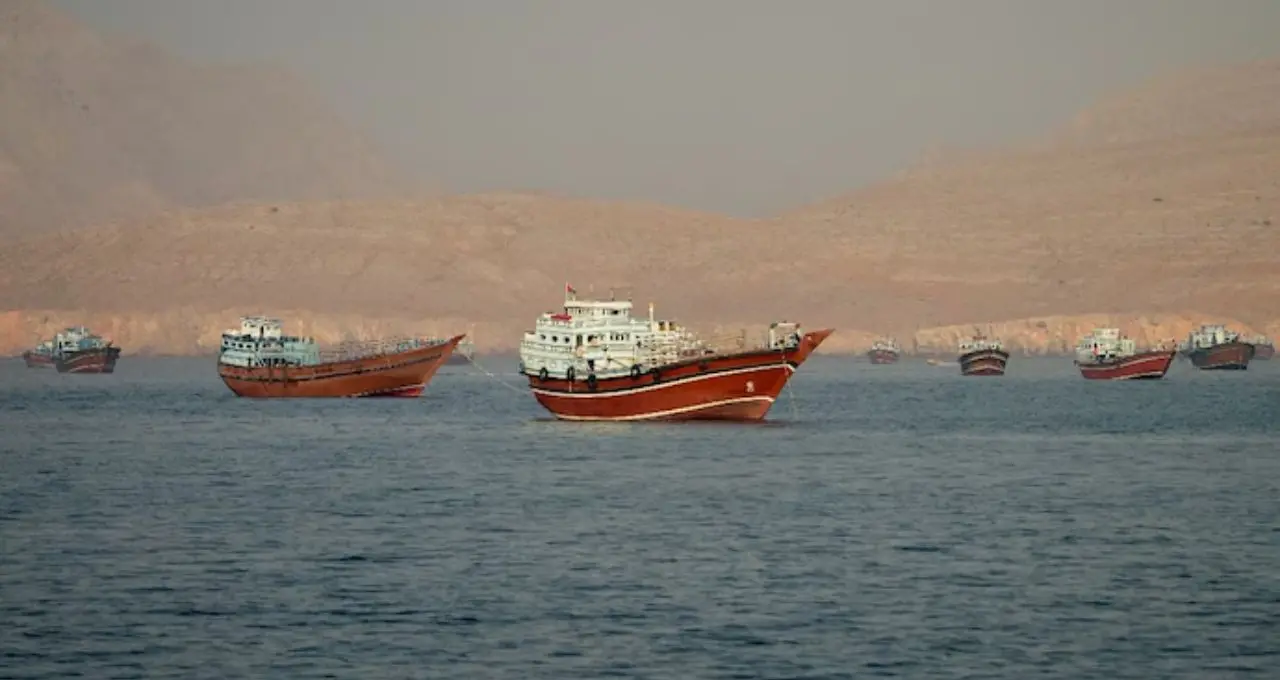
The provision concerning the reopening of the Strait of Hormuz has been described as one of the most significant aspects of the reported agreement, as the waterway serves as a key route for global oil supplies. If implemented, the arrangement could have a substantial impact on international energy markets and maritime trade.
Several countries, including China, have welcomed the reported agreement and called on all parties to implement its provisions. Preparations are reportedly underway for further technical-level discussions and implementation procedures, although the status of some meetings remains unclear.


