
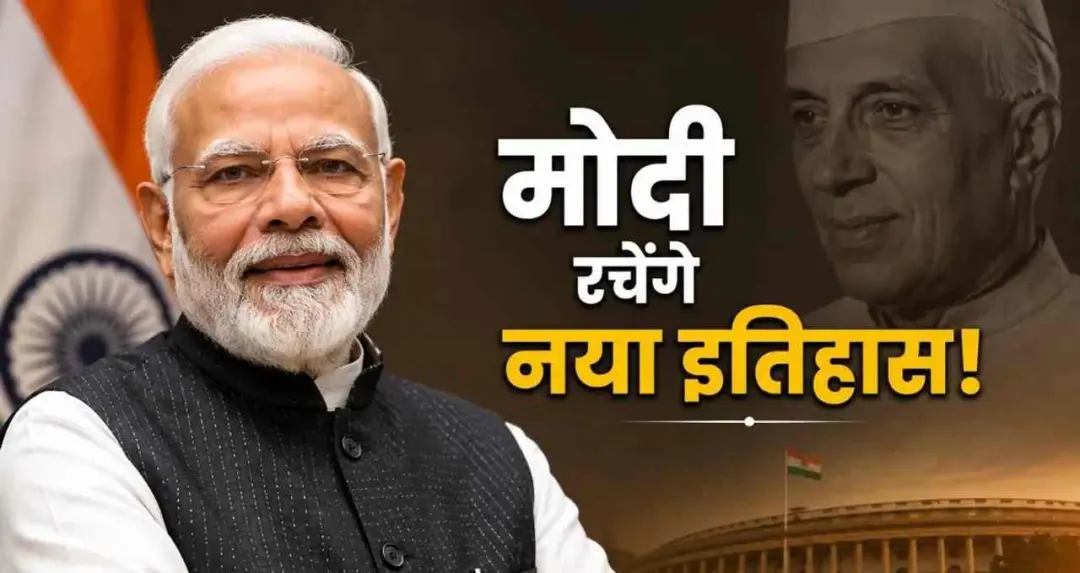
Prime Minister Narendra Modi on June 10, 2026, set a new record as the longest-serving elected Prime Minister in India’s history in terms of a continuous elected tenure.
With 4,399 consecutive days in office as an elected Prime Minister, Modi surpassed the record of India’s first Prime Minister, Jawaharlal Nehru, who served 4,398 consecutive days following his election after the country’s first general elections.
The milestone coincides with the completion of 12 years of the Modi government at the Centre.

According to experts, Nehru’s tenure as a democratically elected Prime Minister is counted from May 1952, following India’s first general elections in 1951–52. He remained in office until May 27, 1964, serving continuously for 4,398 days.
Narendra Modi first assumed office as Prime Minister in May 2014. After securing consecutive victories in the 2019 and 2024 general elections, he continued his tenure in office. On June 10, 2026, he crossed the mark of 4,399 consecutive days, establishing a new record. Political analysts say the achievement reflects continuity of electoral mandate within India’s democratic system.
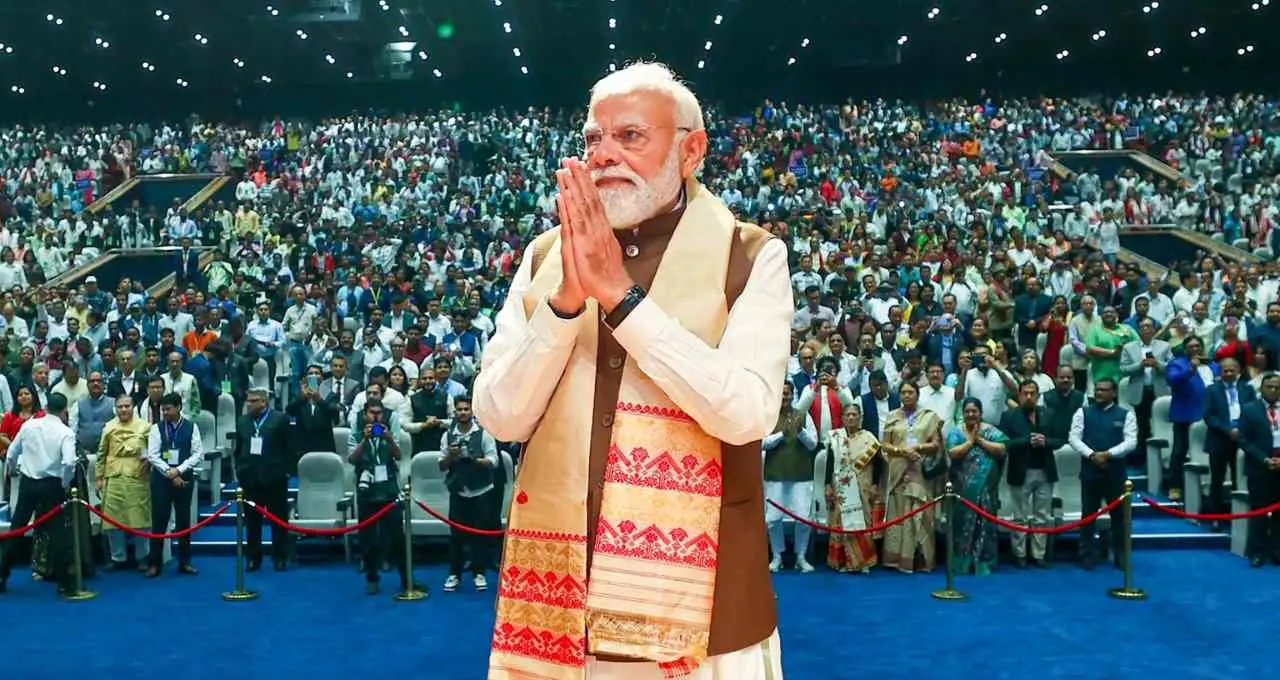
The occasion also marks the completion of 12 years of the Modi government at the Centre. A key meeting of the National Democratic Alliance (NDA) is being held in New Delhi. Prime Minister Narendra Modi, senior leaders of the Bharatiya Janata Party (BJP), and representatives of other alliance partners are expected to attend the meeting.
The meeting, being held at Bharat Mandapam, is expected to include discussions on future political strategy, development programmes, and the alliance’s agenda.
In addition, the Prime Minister will hold a meeting with Chief Ministers and Deputy Chief Ministers of NDA-ruled states, followed by a special dinner in their honour.
Narendra Modi’s political journey is widely regarded as one of the most discussed trajectories in Indian politics. Born into a modest family in Gujarat, he spent his early years amid economic challenges. Before taking an active role in electoral politics, he worked as a pracharak of the Rashtriya Swayamsevak Sangh (RSS) and handled organisational responsibilities. He later served in various positions within the Bharatiya Janata Party and built his political profile.
In 2001, Modi became the Chief Minister of Gujarat and led the state for nearly 13 years. He subsequently led the BJP to victory in the 2014 general election and became Prime Minister of India for the first time.
Modi has secured consecutive victories in the Lok Sabha elections of 2014, 2019, and 2024. Under his leadership, the Union government has undertaken several major policy and administrative decisions, including the removal of the provisions of Article 370 from Jammu and Kashmir, expansion of the digital payments system, large-scale infrastructure development, initiatives aimed at promoting manufacturing and investment, and the Atmanirbhar Bharat campaign.
The government has also placed emphasis on economic growth, digital transformation, social welfare programmes, and strengthening India’s role on global platforms. Opposition parties and various analysts, meanwhile, have presented differing views on several government policies, contributing to continued political debate within India’s democratic framework.


