
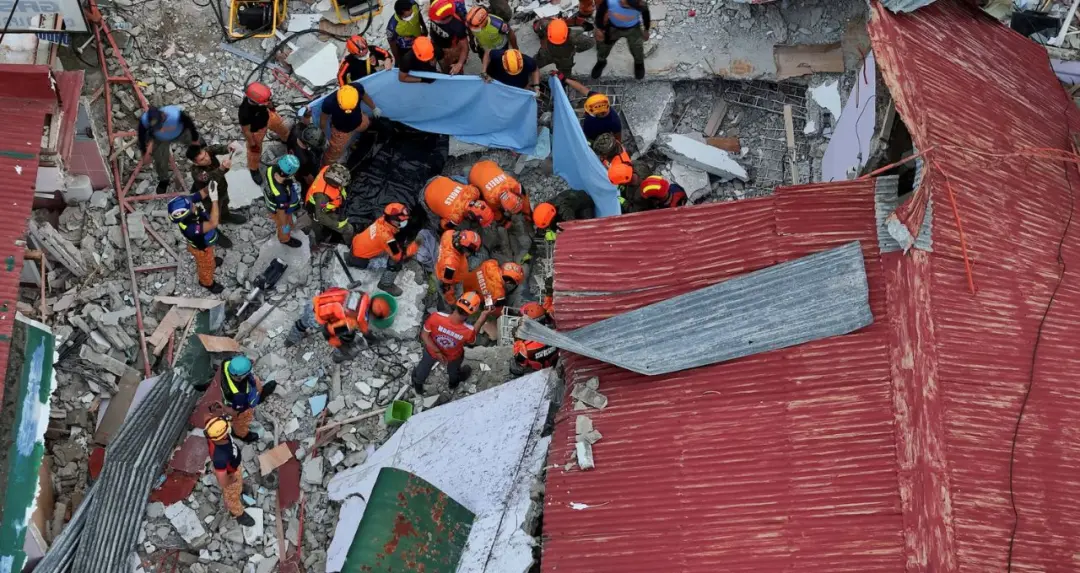
Mindanao Island in the southern Philippines remains under severe strain following a powerful 7.8-magnitude earthquake, with hundreds of aftershocks continuing to be felt across the region. Preliminary reports indicate that 37 people have died and more than 487 have been injured, while authorities have warned that the death toll could rise as rescue operations continue.
Since the main earthquake, Mindanao has experienced continuous aftershocks of varying intensity. The ongoing tremors have complicated relief and rescue efforts across affected areas.
Several buildings have collapsed, roads have been damaged, and landslides have been reported in multiple locations. Power and telephone services remain completely disrupted in several areas, affecting communication networks.
Following the earthquake, tsunami warnings were issued for parts of the Philippines as well as coastal areas of Indonesia and Japan. Thousands of people were moved to safer locations.
Although the threat was later reduced, concerns remain among affected communities.



The Philippine government has activated its administrative machinery in response to the disaster. President Ferdinand Marcos Jr. has instructed all relevant agencies to accelerate relief operations.
Senior officials from the health and transport departments have arrived in Mindanao and are monitoring conditions on the ground.
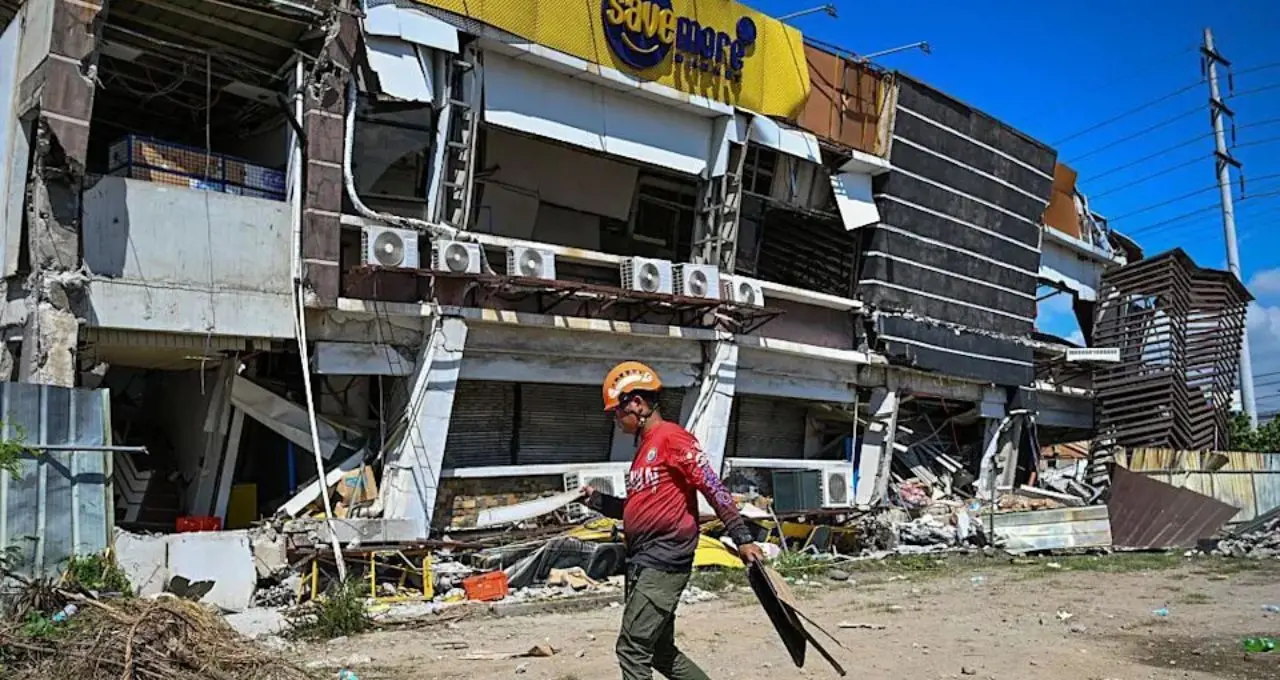
According to disaster management agencies, approximately 2,000 homes and more than 6,000 school buildings have been damaged. Several structures have collapsed completely, while others have been left structurally weakened.
Reports indicate extensive damage in both rural and urban areas, leaving thousands of people displaced.
Residents reported that the earthquake was so intense that buildings began collapsing, prompting people to rush outside. In several schools, children were outside at the time, helping to avoid a larger loss of life.
One teacher said students were crying in fear and were difficult to calm.
The Philippines is located within the Pacific Ocean’s Ring of Fire, a region where earthquakes and volcanic activity are common.
According to experts, the earthquake was caused by plate movement in the Cotabato Trench, which has previously generated major earthquakes.
The same region experienced a 7.9-magnitude earthquake in 1976 that triggered a destructive tsunami and caused approximately 5,000 deaths. The current earthquake has renewed attention on that historical disaster.
Landslides and damaged bridges have made access to several affected areas difficult. In some locations, relief supplies are being delivered only by air.
Local authorities said the biggest challenge is reaching remote villages with assistance.
Emergency teams are continuing operations under instructions from President Marcos Jr. Doctors and relief workers are treating the injured, while rescue teams are searching for people trapped beneath debris.
Government officials said relief and rescue operations will continue despite ongoing aftershocks.


