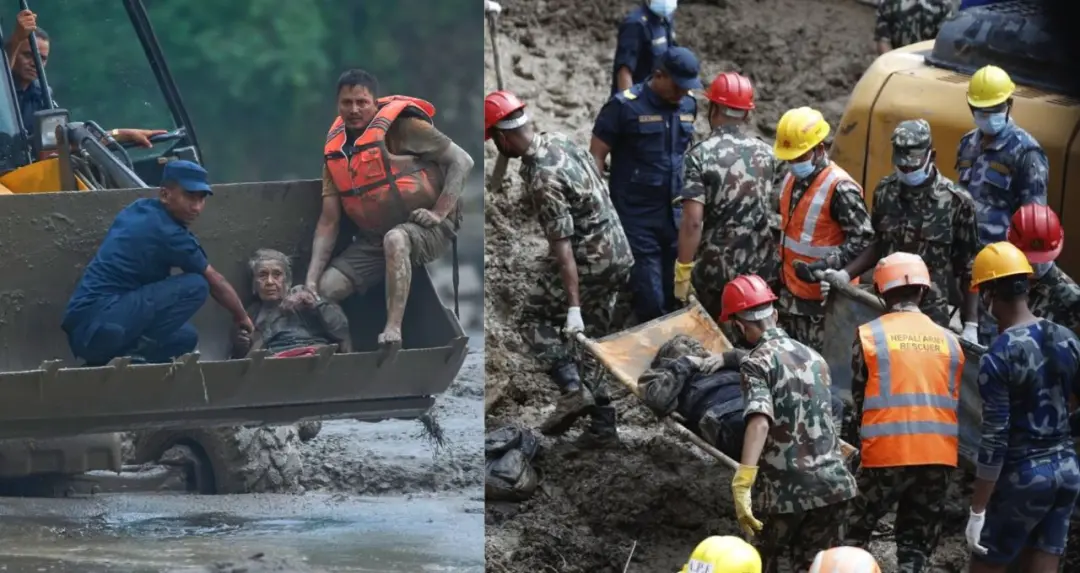
A devastating flash flood on the Nepal-Tibet border has killed more than 350 people, while more than 1,300 people remain missing, according to the latest international reports. Villages, roads and bridges have been swept away in several parts of Nepal, while flooding and debris have caused extensive damage in Tibet’s Gyirong area.
The natural disaster was initially linked to an earthquake, but analysis by the US Geological Survey (USGS) later provided a different explanation. Scientists said the seismic signal measuring 5.2 in magnitude was not caused by a conventional earthquake. Instead, it resulted from the collapse of a large section of a glacier, followed by the rapid movement of rocks, ice and debris.
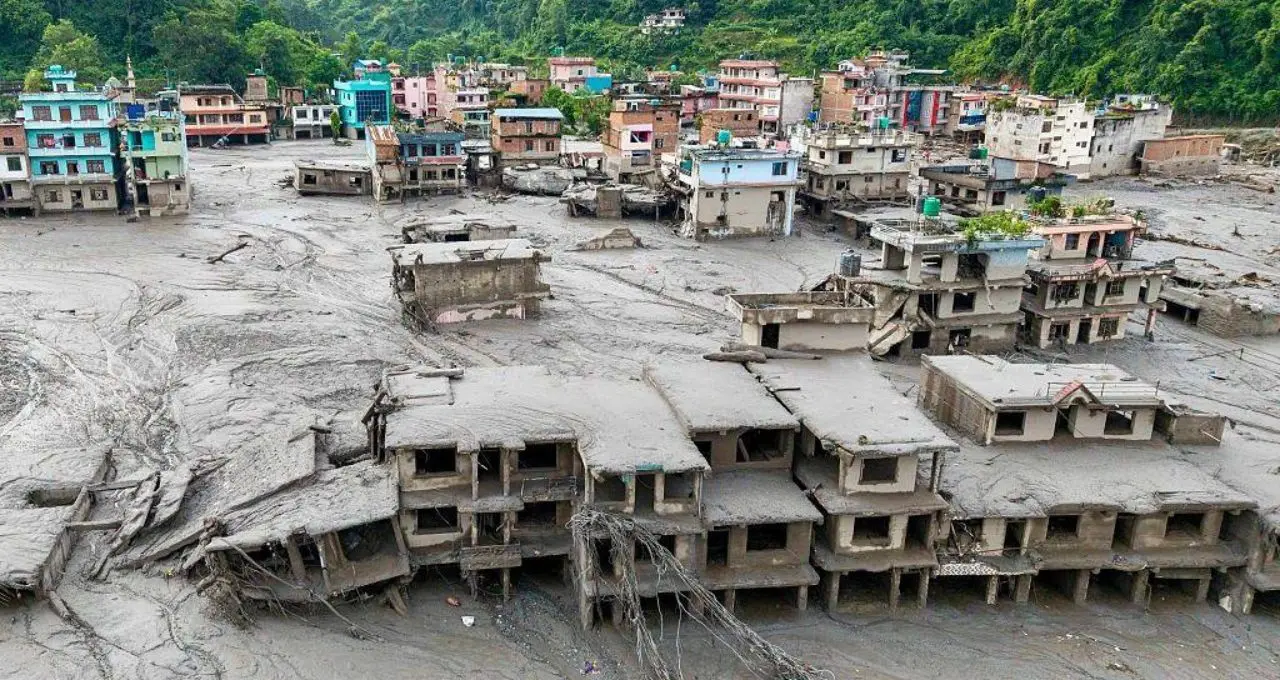
According to experts, a massive volume of ice and rock fell down a mountain slope and entered the river system, causing the water flow to increase suddenly. Water carrying debris caused extensive damage to homes, vehicles, bridges and other structures along its path.
Rasuwa district has been one of the main centres of the disaster, while the flooding has also reached lower-lying areas. Heavy damage has been reported in several districts, including Nuwakot, around the Bhotekoshi and Trishuli river systems. Water and debris surrounded homes in areas along the rivers, while several roads and bridges were destroyed.
According to The Kathmandu Post, damage caused by flooding and debris has been reported from Nuwakot, Dhading, Chitwan, Tanahun, Gorkha and Nawalparasi East, downstream from Rasuwa. A large number of people have been displaced and several families have been moved to safer locations.
The Gyirong Border Port in Tibet was also heavily affected. Videos from surveillance cameras showed waves of water and mud moving towards buildings and roads in the border area. Some footage showed people running to safety.
Gyirong has long been an important route for trade and tourism between Nepal and Tibet. The area is also important for the Kailash Mansarovar pilgrimage and movement between the two countries. Flooding has damaged transport facilities and border infrastructure in the area.
Locating missing people remains one of the biggest challenges following the disaster. Various international reports have indicated that more than 1,300 people are missing from affected areas of Nepal and Tibet. They include local residents as well as foreign nationals, tourists and pilgrims. The figures are continuing to change, and records held by different government agencies differ.




Information has also emerged about a large number of Indian nationals missing in Nepal. Several tourists and pilgrims travelling to Kailash Mansarovar were present in the border region at the time. Families in several countries have been unable to contact relatives.
The area connected to the Nepal-Tibet border is also important for religious tourism. Pilgrims travelling to Mount Kailash and Mansarovar often pass through the region. Damage to roads, bridges and border posts has affected travel routes.
According to an Associated Press report, more than 100 Kailash Mansarovar pilgrims may be among those missing. Information has emerged that citizens of India, the United States, the United Kingdom, Australia and Canada were affected.
The potential for a second flood has become a major concern following the initial destruction. Water has been accumulating after debris blocked the river in the upper area, creating a barrier lake-like situation.
According to Chinese officials, the lake contains around 2 million cubic metres of water, while around 3 million cubic metres of additional water could enter it over the next three days. If the natural barrier breaks, the stored water could suddenly flow downstream and create another flood risk in areas already affected by the disaster.
The danger has therefore not fully passed for people living in downstream areas. Authorities are having to prepare for a potential second disaster while continuing relief operations.
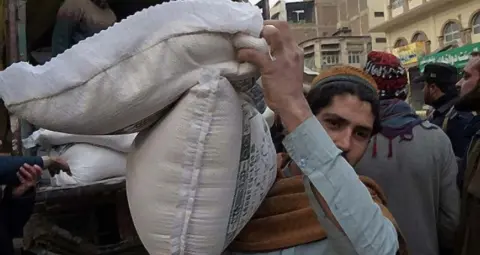
Rescue teams are facing difficulties reaching affected areas because of the extensive damage. The destruction of roads and bridges has disrupted ground access to several locations. Helicopters are being used to deliver relief supplies and evacuate people.
Nepal Prime Minister Balendra Shah visited the flood-affected Bidur area of Nuwakot on August 27. He received information about the damage and relief operations from the local administration, security agencies and elected representatives. The prime minister directed officials to provide immediate assistance to displaced families, reopen blocked roads and restore damaged infrastructure as soon as possible.
Local health services are facing pressure because of the large number of injured people and displaced families. Providing medical assistance to remote areas has also become difficult. Authorities are simultaneously dealing with treatment of the injured, searches for missing people and evacuations.
The danger is not limited to floodwater. Large quantities of debris, broken mountain slopes, unstable terrain and changing river courses are also creating risks for rescue workers. Search operations are therefore being conducted with caution.
Scientists say the Himalayas are warming rapidly and glacier instability is increasing. This could raise the risk of compound disasters involving ice, rock and water. Experts have described the event as a complex or compound disaster in which glacier collapse, debris movement, river blockage and sudden flooding were interconnected.
However, experts have advised against attributing any single event solely to climate change. At the same time, concerns are increasing that rising temperatures could affect the stability of glaciers and mountain slopes.
Glacier-related floods and debris incidents have also occurred in the Nepal-Tibet border region and other parts of the Himalayas in previous years. In July 2025, flooding originating from Tibet caused extensive damage in Nepal’s Rasuwa area and killed several people. That history has added to concerns about future risks following the current disaster.
Experts say post-disaster relief alone will not be sufficient. They have called for modern sensors, satellite-based warning systems and ber local disaster preparedness to monitor glaciers, lakes and river routes in high-altitude areas.
The floods have swept away several major bridges and roads. This has affected both the delivery of relief supplies and efforts to locate missing people. In some areas, local residents have had to take alternative routes several kilometres long.
Damage to infrastructure could affect not only immediate relief operations but also regional trade and tourism. The Gyirong Border Port and Nepal-Tibet connectivity routes are particularly important in this regard.
Families whose members remain missing are facing continued uncertainty. Disrupted communications in several parts of Nepal and Tibet have delayed information about relatives.
The disappearance of foreign nationals has also brought several governments and embassies into contact with local authorities. Families are waiting for information from ongoing search and rescue operations.
The risk has not ended after the initial disaster. The barrier lake formed upstream and debris accumulated in the river could worsen conditions in the coming days. If the obstruction breaks, a sudden surge of water could again affect downstream areas.
Authorities therefore face two immediate challenges: searching for people trapped or missing in debris and protecting populations in lower-lying areas from a potential second flood.
The disaster on the Nepal-Tibet border has affected a region vulnerable to glacier instability, debris flows and sudden flooding. Relief and rescue operations are continuing, while the number of deaths and missing people may change as rescue teams reach areas that remain inaccessible.
The immediate priorities are to locate survivors, provide relief to displaced families, search for missing people and protect downstream areas from the possibility of a second flood.