
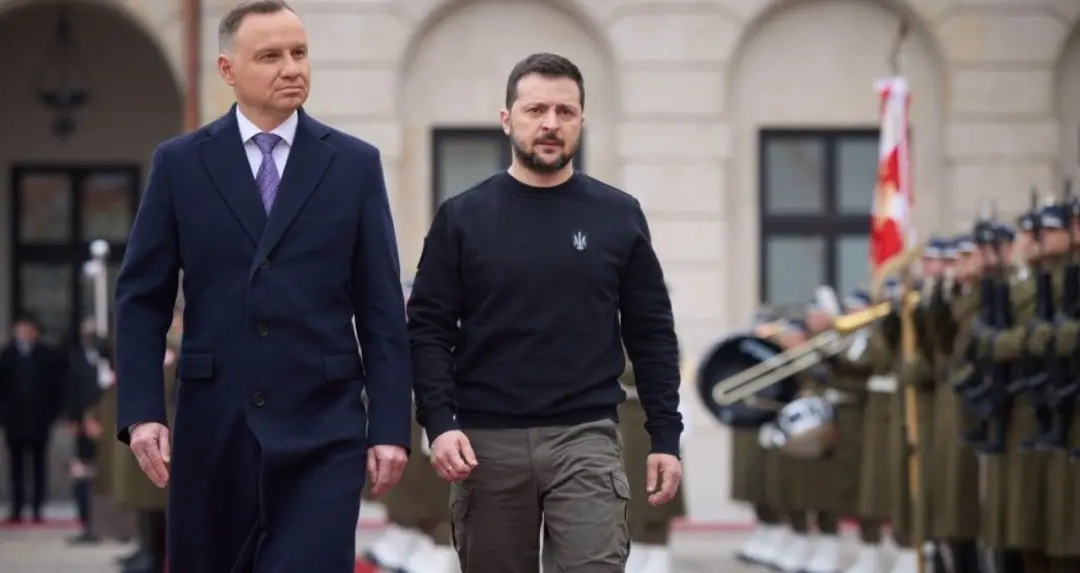
Ukraine and Poland have become embroiled in a new diplomatic dispute over Ukraine’s decision to name a military unit after the controversial World War II-era organisation known as the Ukrainian Insurgent Army (UPA), raising tensions between the two long-standing partners.
The decision has triggered sharp political and public reactions in Poland and has brought bilateral relations under renewed strain.
Polish President Karol Nawrocki is considering whether to revoke the country’s highest state honour, the Order of the White Eagle, previously awarded to Ukrainian President Volodymyr Zelenskyy.
According to the presidential office, Nawrocki has sought advice from the Order Council on the matter and is expected to make a final decision in due course. He criticised Zelenskyy’s decision, describing it as the “glorification of criminals and murderers.”
The dispute began after Zelenskyy issued a decree naming a unit of Ukraine’s Special Operations Forces after the UPA.
The Ukrainian Insurgent Army was active during the 1940s and 1950s. In Ukraine, it is regarded as a symbol of the country’s struggle for independence and is recognised for fighting both the Soviet Red Army and Nazi Germany.


Poland, however, maintains that the organisation was responsible for the killings of approximately 100,000 ethnic Polish civilians in the Volhynia region between 1943 and 1945.
The UPA continues to be viewed in Ukraine as a movement of independence fighters, while Poland associates it with war crimes and genocide.
This historical disagreement lies at the centre of the current dispute. Political parties across Poland’s political spectrum, from right to left, have criticised the decision. Several lawmakers have argued that Ukraine has ignored historical events involving the killing of Polish civilians.
Poland has been one of Ukraine’s best supporters during the Russia-Ukraine war, providing shelter to millions of Ukrainian refugees and continuing military assistance.
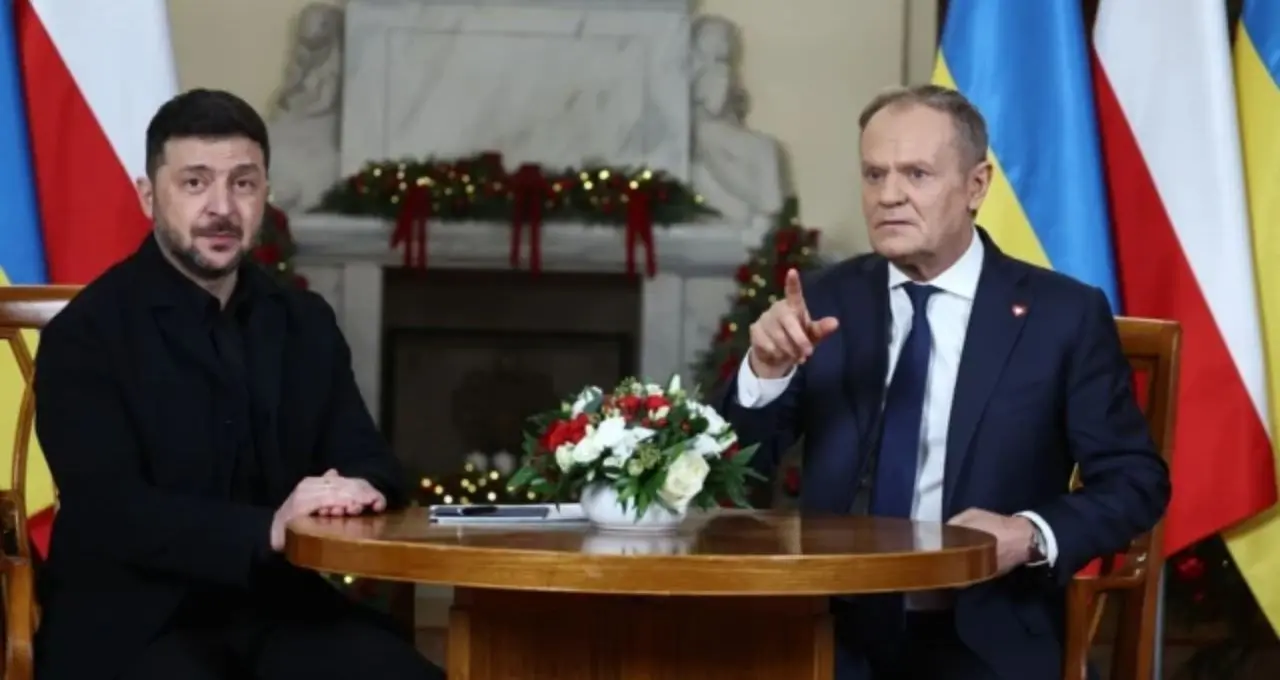
However, the latest dispute has contributed to growing sentiment in Poland that Ukraine is not showing sufficient sensitivity toward its long-standing allies.
Some opposition lawmakers have called for a review of economic and technical assistance provided to Ukraine, including Starlink services.
Some right-wing political leaders in Poland have also questioned Ukraine’s European Union membership process.
They argue that until Ukraine reconsiders its historical decisions, it is difficult to assess its readiness to join the European community.
Polish Prime Minister Donald Tusk has sought to ease tensions by urging both countries to engage in “direct and honest dialogue.”
Tusk said cooperation serves the interests of both nations, while confrontation would benefit only Russia.
According to sources, Kyrylo Budanov, head of the Ukrainian presidential office, recently visited Warsaw in an effort to reduce tensions.
The attempt did not succeed, and the Polish president subsequently moved forward with the process of considering the withdrawal of the state honour.
Ukraine has not issued any b official statement regarding the dispute.
The Foreign Ministry has stated only that there was no intention to offend any country. Associates of Zelenskyy have said the decision was intended to restore historical traditions.
Experts say that if Poland revokes the honour, it would represent a diplomatic setback for Ukraine and could weaken the strategic partnership between the two countries.
The dispute could also affect political debates surrounding support for Ukraine in Europe, where some groups have already been questioning aspects of Ukrainian policy.
Analysts say the issue could become more serious in the coming days, particularly as preparations continue in Poland for an international conference related to Ukraine’s reconstruction.
If tensions escalate further, cooperation between Ukraine and Poland could face long-term consequences.


