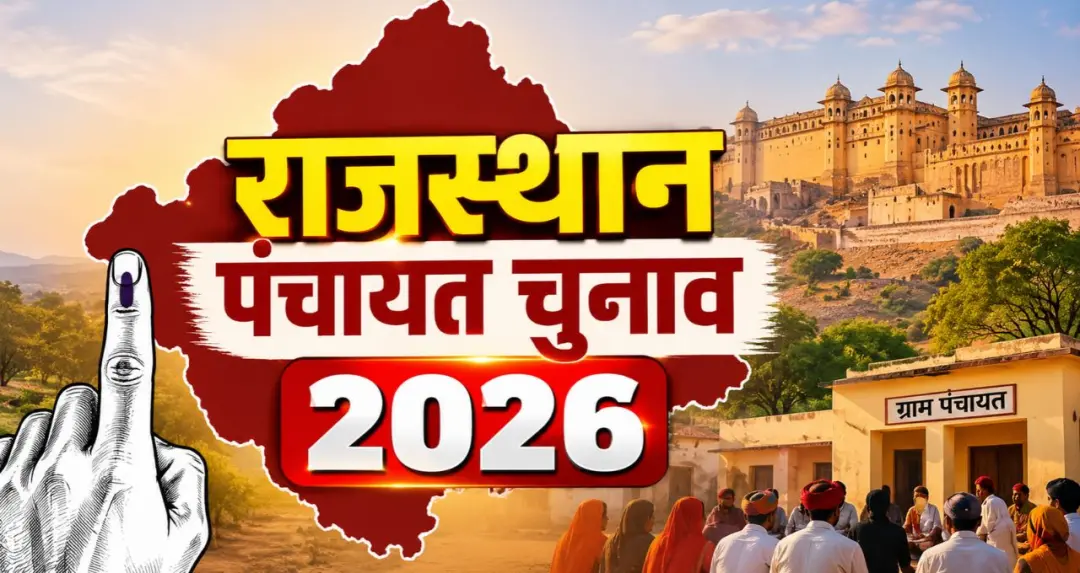
Nomination filing for the first phase of Rajasthan’s panchayat elections will begin at 11 am today. Candidates will file nomination papers for seats in district councils across 16 districts and 104 panchayat samitis. The last date for filing nominations has been set as October 13.
The first phase of the panchayat elections in Rajasthan will cover elections for district council members and panchayat samiti members in 16 districts. Nomination papers for district council members will be submitted at the respective district level, while candidates contesting panchayat samiti seats will file their papers at the sub-divisional level.
Candidates seeking to contest the elections will have to submit the required documents within the prescribed rules and deadlines. Election officials will scrutinise the nomination papers and complete the subsequent stages of the electoral process according to the scheduled programme.
The deadline for filing nominations for the first phase is October 13. The scrutiny of nomination papers, withdrawal of nominations and allotment of election symbols will subsequently be completed according to the Election Commission’s schedule.
The electoral process will subsequently move forward at the gram panchayat level. Nominations for panch and sarpanch posts in the first phase will begin on October 23.
District election officers will issue the notification related to the panch and sarpanch elections on October 8. The nomination process for candidates contesting at the gram panchayat level will begin thereafter.


The panchayat election programme has also brought the Model Code of Conduct into effect in rural areas of Rajasthan.
The Model Code of Conduct came into force in rural areas with the announcement of the Rajasthan panchayat election programme. Restrictions will apply to several administrative decisions, including transfers, after the code takes effect.
Election Commission rules will also apply to activities involving the use of government resources by ministers and other elected representatives. During the election period, ministers will not be able to use government vehicles for election-related activities in their constituencies or related areas.
The prescribed election rules will also apply to stays by ministers and other representatives in government guest houses and dak bungalows.
The restrictions are intended to prevent the use of government resources from providing an undue advantage to any candidate or political side during the election process.
After the Model Code of Conduct comes into effect, the state government will not be able to announce new schemes or programmes that could directly or indirectly influence voters.
Previously approved and ongoing development works may continue under the prescribed rules. Similarly, projects for which the tendering process has already begun will not necessarily have to be stopped solely because the Model Code of Conduct has come into force.
During the election period, the government or any government institution cannot make announcements that could be viewed as an attempt to influence voters. The Election Commission will monitor the use of government machinery and resources during the electoral process.
Around 1.69 lakh new panchayati raj representatives will be elected through Rajasthan’s panchayati raj elections.
Representatives will be elected at different levels, from gram panchayats to district councils. These elected representatives have roles in decisions related to local development, basic facilities and administrative priorities at the rural level.
Political parties, local groups and independent candidates are preparing to contest the elections.
Rajasthan’s panchayati raj elections provide 50 percent reservation for women. Around half of the approximately 1.69 lakh panchayati raj representatives are therefore expected to be women.
According to the available election figures, around 7,200 women sarpanchs are expected to be elected across 14,403 gram panchayats, while around 65,000 women are expected to be elected as ward panches.
Women’s representation will also extend to the panchayat samiti level. Of the state’s 457 pradhan posts, 221 are reserved for women.
The reservation is aimed at increasing women’s political participation in local bodies and strengthening their representation in rural governance. The actual role of elected representatives will depend on their powers, administrative support and local circumstances.
With nominations beginning, candidates are contacting supporters and working on local political equations in rural Rajasthan.
District council and panchayat samiti elections form part of the rural political process, with elected representatives involved in decisions related to local development and administration.
The nomination process will continue until October 13. The electoral picture will become clearer after nominations are filed, followed by scrutiny, withdrawals and the finalisation of candidates according to the election schedule.