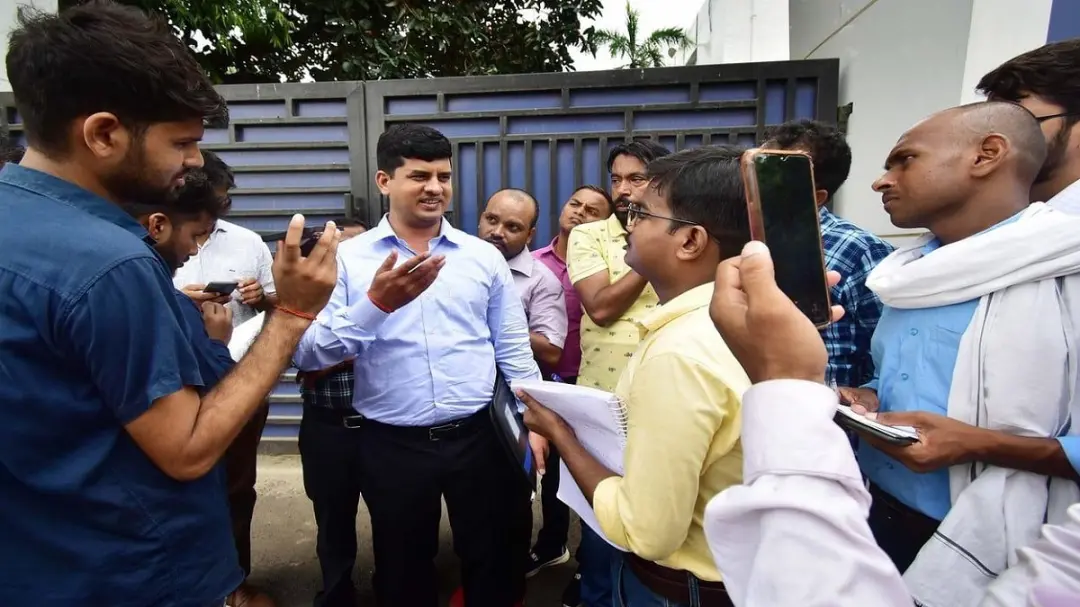
Interviews for the Uttar Pradesh Public Service Commission’s (UPPSC) PCS-2025 recruitment process are assessing candidates’ understanding of economic and social issues affecting the country and the state, alongside their academic knowledge. Interview boards are seeking to evaluate how candidates would identify public grievances and address them after assuming administrative responsibilities.
Questions have covered inflation, unemployment, farmers’ problems, the education system, school dropouts and the use of information technology in government operations. Candidates have also been asked to explain their priorities and identify the issues they would address first if appointed as a Sub-Divisional Magistrate (SDM).
The questions aim to assess candidates’ general awareness, administrative thinking, reasoning and decision-making abilities. Officers selected for administrative services must deal with diverse economic and social situations, including complaints from farmers, unemployed young people, students, traders and rural households.
Such responsibilities require officers to understand problems, obtain information from relevant departments, make decisions in accordance with applicable rules and ensure that eligible beneficiaries receive government assistance. Situation-based questions are being used to evaluate candidates’ understanding of these practical responsibilities.
Unemployment has been a key economic issue raised during the interviews. Candidates have been asked to identify the principal causes of rising unemployment and suggest measures to address the problem.
The questions seek to establish whether candidates view unemployment solely as a shortage of government jobs or also recognise its broader economic and social causes. These include education, skills training, industrial development, investment, local markets and young people’s employment expectations.
Potential measures discussed in this context include encouraging industries and small businesses, providing skills training aligned with market demand, promoting self-employment and developing employment opportunities based on local resources.
In rural areas, agriculture-based industries, food processing, dairy, handicrafts and small enterprises could generate employment opportunities. In urban areas, the services sector, manufacturing, technical training and business expansion could play a role. The effectiveness of such initiatives would depend on implementation, financial resources and an accurate assessment of local requirements.
Inflation has also featured among the economic issues raised during the interviews. Rising prices of food, fuel, transport, rent and other everyday necessities can affect household budgets, particularly those of low-income families.
Administrative officers need to understand complaints relating to inflation and prevailing market conditions, monitor the availability of essential commodities and ensure action in accordance with the law against complaints of hoarding and black marketing.



Candidates have also been asked what they would do for farmers if appointed as SDMs. The question examines their understanding of administrative responsibilities and the rural economy.
In several districts of Uttar Pradesh, agriculture is a major source of livelihood for families. Farmers may face challenges involving irrigation, electricity, the availability of fertilisers and seeds, fair crop prices, government procurement, compensation for crop losses and access to agricultural schemes.
An SDM’s role extends beyond receiving complaints. It also involves coordinating with relevant departments to facilitate timely resolution of problems.
For instance, if a village faces an irrigation water shortage, the officer may seek a report from the relevant department to establish the cause. If farmers encounter difficulties at a government procurement centre, the arrangements can be examined and corrective measures taken in accordance with applicable rules.
In cases of crop damage, the officer may coordinate with relevant departments to oversee surveys and the process of providing assistance to eligible farmers. These responsibilities involve identifying problems, ensuring timely action and maintaining accountability within the administrative system.
The interviews have also addressed the problem of children dropping out of school. One candidate was asked what steps they would take to address the issue.
School dropouts may be linked to household financial circumstances, access to schools, the quality of education, domestic responsibilities and wider social conditions. Some children may need to contribute to family income, while long distances to schools, a lack of transport and limited awareness of the importance of education may also affect attendance.
Addressing the issue requires identifying its underlying causes and coordinating with the relevant departments.
Possible measures include monitoring attendance, contacting families of students who remain absent for extended periods, informing eligible children about available government support and reviewing basic facilities in schools.
Where financial difficulties contribute to a child leaving school, efforts can be made to connect eligible students with scholarships or other assistance schemes. If the problem involves teacher shortages, inadequate infrastructure or the learning environment, the administration can coordinate with education officials to pursue corrective action.
Candidates have also been asked how information technology can be used in government operations. Digital systems increasingly play a role in managing government schemes, certificates, grievances, revenue-related services and departmental records.
Technology can help track application status, route complaints to the relevant departments, organise beneficiary records and improve transparency. However, the benefits of digital systems depend on whether citizens can use them without difficulty and whether technical problems can be resolved effectively.
Candidates discussing technology in administration are also expected to consider the limitations of digital access. Internet availability in rural areas, digital literacy, information in local languages and assistance for citizens are among the factors that need attention.
Alternative support is important for older people, persons with disabilities and those with limited access to digital tools. Protecting citizens’ personal data and maintaining the reliability of government records are also essential. Technology can improve administrative processes, but responsibility ultimately remains with officers and the relevant departments.
Another interview question asked candidates whether they would prefer a government job or a private-sector job and to explain the reasoning behind their choice.
The purpose is to assess not only candidates’ career preferences but also their motivation, professional outlook and understanding of responsibility. Government service requires officers to act in accordance with the law, maintain impartiality and prioritise public interest. The private sector also offers different professional responsibilities and opportunities.
Candidates are expected to present clear and logical reasons for their preferences.
Candidates have also been asked which problems they would address first after taking up an administrative position. The question focuses on how they would establish priorities as SDMs.
Responsibilities at the sub-divisional level may include law and order, revenue matters, land disputes, implementation of government schemes, public grievances and disaster management. Officers may face several issues simultaneously, making it necessary to allocate time and resources according to the seriousness of each problem, the number of people affected, legal obligations and immediate requirements.
In the event of a flood, fire or another disaster, public safety and relief would require priority. If a village faces a serious drinking water shortage, the officer may need to coordinate with the relevant departments to arrange a timely response.
Revenue matters and land disputes require examination of records, hearings for the parties concerned and decisions in accordance with applicable rules. Complaints of irregularities in government schemes require factual verification and appropriate action.
These questions are intended to assess candidates’ ability to make balanced decisions under pressure and use limited resources effectively.
Knowledge of laws and regulations alone is not considered sufficient for administrative positions. Officers must also listen carefully to public grievances, understand the positions of different parties and make impartial decisions.
Where parties present conflicting claims, decisions should be based on available documents, facts and applicable rules rather than conclusions reached without investigation. Situation-based questions give candidates an opportunity to explain their reasoning and decision-making processes.
Administrative officers also serve as an important link between government schemes and the public. A scheme can deliver its intended benefits only when assistance reaches eligible people on time.
If beneficiaries face difficulties understanding application procedures, arranging documents or dealing with departmental delays, officers need to identify these obstacles. Maintaining an effective grievance-redressal system, reviewing departmental performance and providing citizens with accurate information are also important administrative responsibilities.
Questions on economic and social issues during the PCS-2025 interviews indicate that candidates are being asked to demonstrate both an understanding of current circumstances and the ability to consider practical responses.
When addressing inflation, unemployment and farmers’ problems, candidates need to consider the causes, the responsibilities of relevant departments, available resources and applicable rules. Questions on education and digital administration similarly require an understanding of social circumstances, citizens’ needs and administrative constraints.
The PCS interviews being conducted in Prayagraj are therefore examining candidates beyond their knowledge of the prescribed syllabus. Questions about supporting farmers, addressing school dropouts, responding to unemployment and inflation, and using technology in government operations are being used to assess how candidates would approach public problems, establish priorities and find solutions within the law.
Interview performance will form part of the final selection process. Effective responses require factual understanding, logical reasoning, sensitivity to public needs and an appreciation of administrative responsibility.