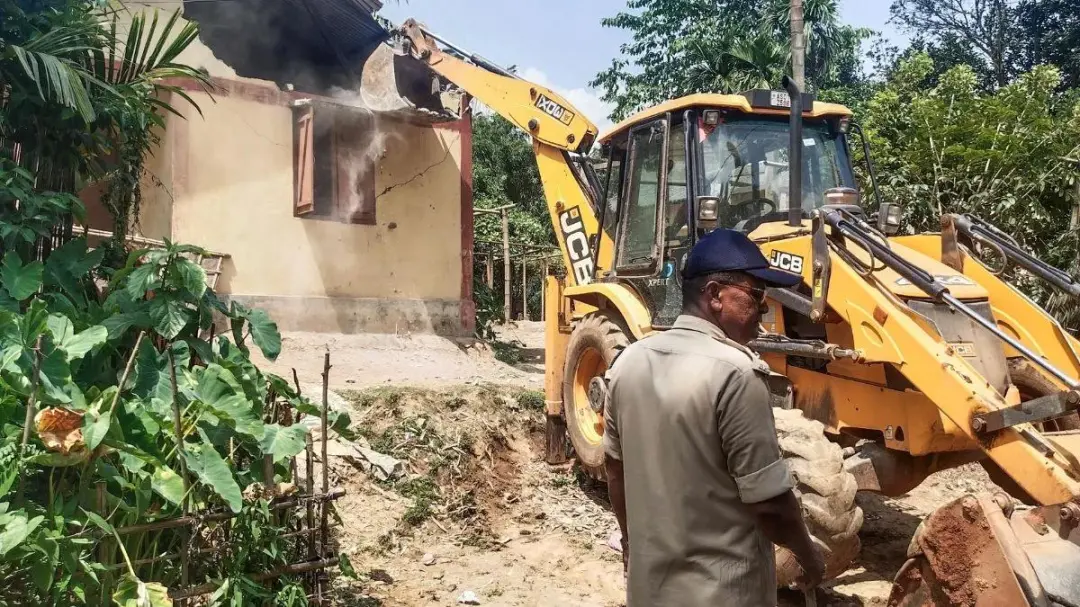
Uttarakhand’s campaign against drugs is being expanded beyond the arrest of smugglers and seizure of narcotic substances, with police now examining properties linked to people involved in the drug trade. In Dehradun district, around 20 houses have been identified at the initial stage and are under police scrutiny. People linked to these properties have either faced cases related to drug trafficking or sale, or their activities are being investigated by police.
Police have sought reports from the district administration regarding the identified houses. Based on verification of ownership, legality of construction and the role of the accused, the nature of further action will be determined.
Under the new approach, the scope of anti-drug action is being extended to the economic network associated with the trade. Until now, the primary focus has generally been on arresting smugglers, recovering narcotic substances from their possession and tracing links in the supply network. Police are now also examining whether money earned through the drug trade was used to purchase land, construct houses or acquire other properties.
If an investigation establishes a connection between a property and the drug trade and questions are also found regarding the legality of the property, administrative action may be possible under the relevant laws.
The process of identifying areas in Dehradun city and its surrounding regions where complaints of drug sale or trafficking have been received over a long period is also underway. Police are using GIS, or Geographic Information System, technology to map these areas as drug hotspots.
Through GIS mapping, information received from different areas is being brought together to understand where the drug network is more active. Records of previous cases, arrested smugglers, seizures and information received at the local level are also being incorporated into the process.
The objective of GIS mapping is not limited to identifying an individual or a particular house. Police are seeking to understand the geographical activity of the entire network. Information from locations where complaints of repeated drug sales or supply have emerged is being added to the records. Police surveillance may subsequently be increased in such areas.




According to police, around 20 houses have been identified during the initial investigation. People associated with these houses have either faced cases related to drug trafficking or sale, or their activities are under police surveillance.
However, merely having a case registered against a person does not by itself constitute a basis for demolishing the person’s property. Police and the administration are therefore examining the properties at different levels.
The investigation will examine whose name the house is registered under, when it was constructed, what permissions were obtained for its construction, what land-related documents exist and what role the concerned person has allegedly had in the drug trade.
Action has previously been taken against locations linked to drug smugglers in Dehradun’s Sahaspur area. Police are now focusing on Dehradun city and surrounding areas identified as drug hotspots.
Police are also collecting information about people, locations and financial activities associated with the network. Property investigations and network mapping are being incorporated into the anti-drug campaign.
The district administration will have an important role in the process. Police have sought reports on the 20 identified houses from the administration. At the administrative level, documents will be examined and property records verified.
If construction is found to be illegal in any case, or another legal violation is confirmed, the concerned departments may take action under their respective rules. Police have said that ownership and the legality of construction will be examined before any property is demolished.
An important part of the investigation will also involve the criminal history of the accused. Police are examining how many cases have previously been registered against a person, in which cases arrests were made, what types of narcotic substances were seized and who the person was in contact with.
By linking old records with current cases, police are seeking to build a picture of the network. This could help establish how smugglers active in one area are connected with suppliers or distributors in other areas.
Monitoring financial activities is also part of the strategy. Police are examining the relationship between the income and assets of people involved in the drug trade.
The objective is to determine whether money obtained through the illegal narcotics trade was used to purchase property or finance construction. If such a connection is established in any case, further legal proceedings will proceed in accordance with the relevant laws and decisions of the competent authorities.
The GIS mapping system being used to identify drug hotspots in Dehradun is providing a technological basis for the campaign. Previous cases available with the police are being brought together to identify locations where drug-related cases have repeatedly been reported.
Information on arrests and seizures is also being incorporated. Local information is being combined with existing records to identify areas where greater surveillance may be required.
Police are focusing not only on houses but on the overall structure of the drug network. The investigation is examining where narcotic substances originate, how they reach the city or district, through whom they are sold and how the financial activities of people linked to the trade are conducted.
For this purpose, contacts of smugglers, previous cases, seizure records and property-related documents are being examined together.
Senior Superintendent of Police Premendra Dobhal said the anti-drug campaign would not be limited to arrests. Monitoring of smugglers’ networks, their locations and financial activities is also being carried out.
He said the nature of further action could become clear after the investigation of the identified properties is completed. This means that around 20 houses have currently been identified, but it cannot be said that bulldozer action has been finalised against all of them. The investigation and verification process will be completed first.
Police identifying a house for monitoring or investigation and issuing a legal order to demolish that house are separate processes. Only after the investigation of the identified properties will it be determined in which cases further action is warranted.
At present, the police preparation is at an initial stage of possible action. The final course of action will depend on the documents relating to the properties and the status of their construction.
Police action against complaints related to drug sale and trafficking in Dehradun and surrounding areas could be expanded further. If information about other houses or properties linked to previous cases emerges during the investigation, the number of identified properties could increase.
At present, around 20 houses are under police scrutiny at the initial stage, and their reports have been sought from the district administration.
The investigation report will play a key role in determining the next steps. Information on property ownership, the legality of construction and cases registered against the people concerned will help establish the course of administrative action.
Police may also increase surveillance at new hotspots identified through GIS mapping. The investigation is seeking links between previous cases and current activities to understand the drug network.
The anti-drug campaign in Uttarakhand is therefore examining arrests and seizures alongside the properties and financial activities of people linked to the drug trade. Around 20 houses have been identified initially in Dehradun, and reports on them have been sought from the district administration. Ownership and construction legality will be verified, while GIS mapping is being used to identify drug hotspots and prepare for increased surveillance. The type of legal or administrative action against any property will be determined only after the investigation is completed.