The government on Monday introduced the Sustainable Harnessing and Advancement of Nuclear Energy for Transforming India (SHANTI) Bill 2025 in the Lok Sabha, which is expected to bring significant changes to India's civil nuclear sector.
SHANTI Bill 2025: India has taken a historic step in its civil nuclear energy policy by introducing the SHANTI Bill 2025 in the Lok Sabha. The full name of the bill is Sustainable Harnessing and Advancement of Nuclear Energy for Transforming India. This legislation aims to end decades-old government monopoly in India's nuclear sector, increase private sector participation, and attract international investment.
If the bill is passed by both houses of Parliament, the Atomic Energy Act, 1962 and the Civil Liability for Nuclear Damage Act, 2010 will be repealed. These two laws have long been considered obstacles for domestic and foreign investors.
Why was the SHANTI Bill brought?




According to Minister of State in the Prime Minister's Office, Dr. Jitendra Singh, the SHANTI Bill provides a practical and internationally compliant civil nuclear liability framework. It also grants statutory status to the Atomic Energy Regulatory Board (AERB), which will further strengthen India's nuclear safety system.
The government says that this bill is linked to India's long-term energy and climate goals, including net-zero emissions by 2070 and increasing nuclear power capacity from 8.2 gigawatts to 100 gigawatts by 2047.
Key Provisions of the SHANTI Bill 2025
Under this bill, Indian private companies will for the first time be allowed to obtain licenses for the construction, ownership, operation, and decommissioning of nuclear power plants and reactors. Previously, this sector was mainly limited to NPCIL and other government undertakings. The bill also clarifies that the plant operator will be solely responsible for any nuclear accident. Equipment suppliers will be exempt from liability, addressing a major concern for foreign companies.
The maximum liability limit for a nuclear accident will be equivalent to 300 million SDRs as determined by the IMF, in line with global standards. Operators will be required to maintain insurance or a liability fund ranging from $11 million to $330 million, based on the reactor's capacity.
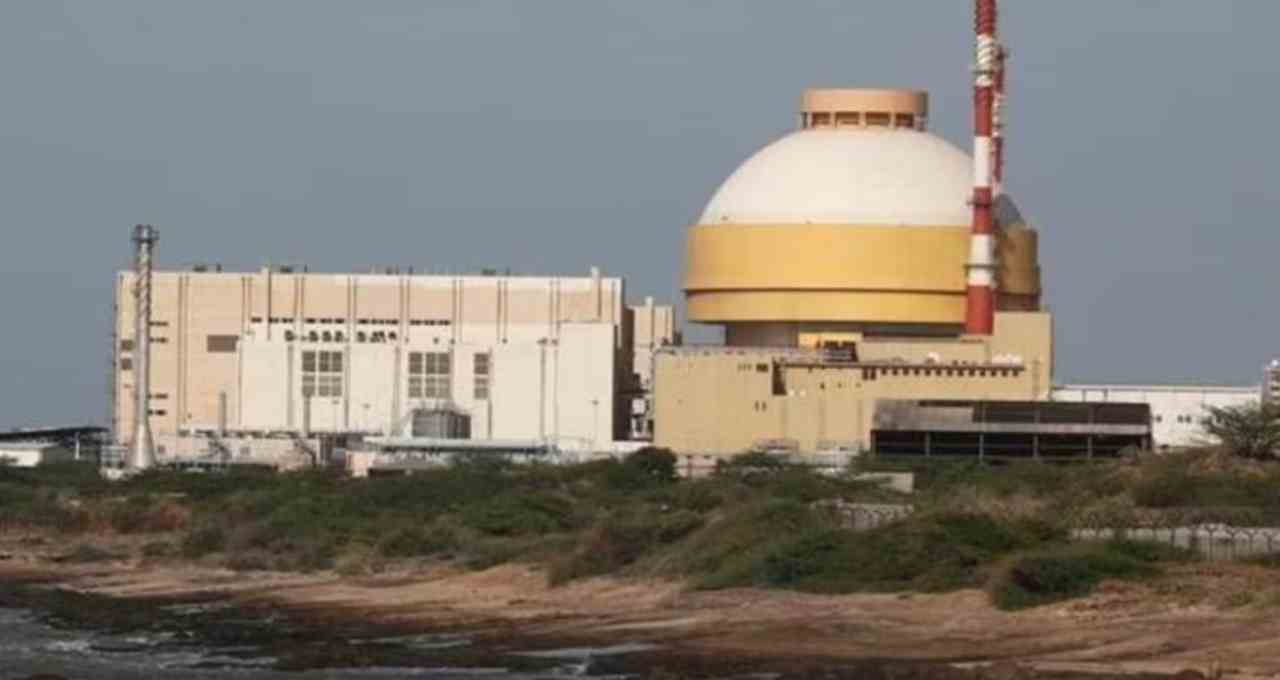
What will change for private and foreign investment?
Under the SHANTI Bill, privately registered companies in India will be able to participate in the manufacture of nuclear fuel, transportation and storage of spent fuel, and import-export of selected nuclear technology and software. However, sensitive activities such as fuel enrichment, spent fuel reprocessing, and heavy water production will remain entirely under government control.
Companies controlled by foreign entities or registered outside India will not receive licenses directly, but they will be able to partner with Indian companies. This is why global companies like Westinghouse, GE-Hitachi, EDF (France), and Rosatom (Russia) have shown interest in investing in India.
Safety, Regulation and Penalty Provisions
With the AERB receiving legal powers under the bill, the nuclear safety and monitoring system will be strengthened. The Atomic Energy Redressal Advisory Council will be established for dispute resolution. Strict penalties are provided for violations of the rules—fines of up to ₹5 lakh for minor offenses, and penalties of up to ₹1 crore for serious crimes.
The SHANTI Bill will not only strengthen India's energy security but also help establish the country as a significant player in the global nuclear energy market. It is expected to generate billions of dollars in investment, cutting-edge technology, and new employment opportunities.