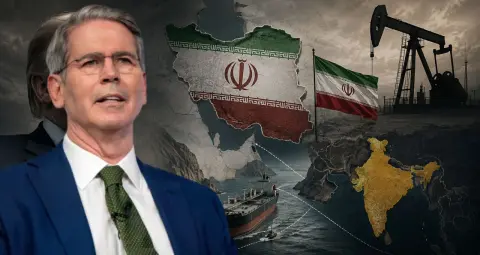
Tensions between Iran and the United States have escalated again in the Middle East following reported missile and drone attacks and subsequent military responses by both sides.
Iran’s Islamic Revolutionary Guard Corps (IRGC) has claimed responsibility for targeting U.S. military installations in Kuwait and Bahrain. According to the Iranian claim, ballistic missiles and drones were used in the attacks against American military facilities in Kuwait and the headquarters of the U.S. Navy’s Fifth Fleet in Bahrain.
The U.S. Central Command (CENTCOM), however, stated that all attacks were successfully thwarted and that no American military facilities sustained damage.
According to U.S. defense officials, most of the missiles were intercepted by air defense systems before reaching their targets, while others failed to reach their intended destinations. In Bahrain, several drone attacks were also intercepted, with U.S. and local defense systems working together to prevent potential damage.



Amid the attacks, the United States confirmed retaliatory action. Reports said U.S. forces targeted a communications tower on Iran’s Qeshm Island near the Strait of Hormuz.
The U.S. side said the operation was conducted in self-defense, citing increased military activity in the region and a heightened threat environment.
Separately, reports emerged of an attack on an oil tanker near the Strait of Hormuz. The vessel, registered under the flag of Botswana and reportedly heading toward Iran’s Kharg Island, was said to have caught fire, with smoke seen rising from the tanker following the incident.
The escalating tensions in the Middle East have also affected global energy markets. Crude oil prices rose by more than one percent, with Brent crude approaching $97 per barrel and U.S. WTI crude trading near $95 per barrel. Experts have warned that any further escalation could have serious implications for energy supplies.

The situation remains tense in Gaza and Lebanon as well. The United Nations World Food Programme (WFP) said that a major cyberattack in Gaza resulted in the exposure of data belonging to approximately 600,000 families. The leaked information reportedly included names, identification details, mobile phone numbers, and location data.
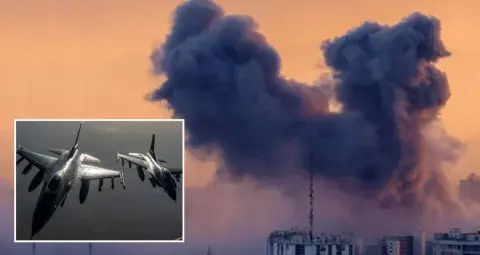
In Lebanon, clashes between Israel and Hezbollah have intensified. Hezbollah claimed it carried out multiple attacks on Israeli military positions and tanks in southern Lebanon, while Israel has continued airstrikes in response.
Questions have also been raised about the role of the United Nations Interim Force in Lebanon (UNIFIL) following the deterioration of security conditions in southern Lebanon. Local and international analysts have said the mission has struggled to effectively fulfill its mandate of maintaining peace and enforcing ceasefire arrangements.
Israel has alleged that UNIFIL has failed to prevent Hezbollah’s military activities, while Hezbollah supporters have argued that the mission is biased toward Israel.
Political rhetoric has also intensified amid the regional tensions. According to reports, former U.S. President Donald Trump expressed dissatisfaction to Israeli Prime Minister Benjamin Netanyahu over military operations in Lebanon.
Sources cited in the reports said the discussion involved a sharp exchange, during which Trump expressed concern over rising civilian casualties and questioned Israel’s military strategy.
Experts have warned that if the current situation is not brought under control, the conflict could expand further. Growing military activity involving Iran, the United States, Israel, and their allies could increase instability across the Middle East.
Any military action affecting the Strait of Hormuz, a strategically important maritime route, could have significant consequences for global oil supplies and international trade.